Metadata conflicts can lead to serious copyright issues, especially for businesses using digital assets like images. Here's the key takeaway: inconsistent or missing metadata can jeopardize your ability to prove ownership or proper licensing, leaving you vulnerable to legal claims.
Key Points:
- What is Metadata? It’s the embedded information in a file (like EXIF data in images) that includes details like ownership, creation date, and licensing terms.
- Why It Matters: Metadata helps verify copyright and licensing compliance. If it's incomplete or altered, disputes can arise.
- Common Issues: Missing metadata, conflicting ownership details, or lack of proper license documentation.
- Risks: Legal claims, demand letters, and fines ranging from $3,000 to $150,000 per image.
- Solutions: Regular audits, automated tools like PicDefense.io, and centralized documentation can help resolve conflicts and ensure compliance.
Bottom Line: Managing metadata effectively is critical to avoid copyright disputes and protect your business from costly legal challenges.
Types and Sources of Metadata Conflicts
Understanding the different types of metadata conflicts is essential for website owners to spot potential copyright risks before they escalate into legal troubles. These conflicts tend to follow certain patterns, making it easier to address them in a structured way.
Common Types of Metadata Conflicts
One frequent issue is missing or incomplete EXIF data. When images lack key metadata - like creation dates, camera details, or ownership information - it becomes much harder to verify copyright. This lack of information can leave businesses exposed to claims they may not be able to refute.
Another common problem is conflicting ownership or licensing information. For example, an image might include metadata indicating it came from a stock photo service, but this doesn’t confirm the website owner has a valid license to use it. As PicDefense explains:
"PicDefense detects if an image is a stock photo, but we don't know if you have a license for it. If an image is flagged as stock, it's up to you to track and document where you licensed it from." [1]
This highlights the importance of carefully documenting licensing details.
Lack of proper license documentation is another major challenge. Even if metadata shows an image is copyrighted, businesses need clear records linking the image to its license. Without this documentation, proving the right to use the image becomes nearly impossible, leaving businesses vulnerable to disputes.
Inconsistent image identification adds to the complexity. When the same image appears under different file names or URLs, compliance tools may treat each version as a separate entity. This forces businesses to verify licensing for each instance, which can quickly become a logistical headache.
Now, let’s look at how these conflicts typically arise.
How Metadata Conflicts Start
The types of conflicts mentioned above often stem from everyday practices that inadvertently create compliance gaps. One major source of trouble is unlicensed image downloads. Many small business owners mistakenly believe that images from sources like Google Images, Pinterest, or even stock photo platforms are free to use or that crediting the source is enough. These misconceptions can lead to costly copyright claims.
Another issue arises from digital asset transfers and re-hosting. When images are uploaded to new servers, resized for various uses, or processed through content management systems, metadata can be altered or even stripped entirely. Each transfer introduces potential inconsistencies that compliance tools may flag as risks.
Editing software and file compression also contribute to the problem by removing essential metadata. These processes make it harder to detect and address conflicts without specialized tools.
Finally, there’s the challenge of gaps between automated detection and actual rights. While copyright detection tools can flag potentially problematic images, they can’t confirm whether a valid license exists. This means businesses must manually verify and document their rights to resolve flagged issues.
These seemingly small missteps can quickly snowball into legal challenges, even for businesses with good intentions. As PicDefense notes:
"PicDefense helps you detect potential risks, but keeping records of your image licenses is key to staying fully compliant!" [1]
Without a systematic approach to managing metadata, even well-meaning businesses can find themselves unprepared for the legal complications that arise.
Impact of Metadata Conflicts on Copyright Compliance
Metadata conflicts can put businesses at serious legal and financial risk. For companies managing large image libraries, these conflicts often lead to costly compliance challenges. These challenges arise in two key areas: verifying image rights and dealing with potential legal actions.
Problems Verifying Ownership or Licensing
Metadata plays a crucial role in confirming image ownership and licensing. EXIF data, often described as a digital fingerprint, provides essential details about an image's copyright status and history [1]. However, when metadata is altered or lost due to formatting issues, important licensing details can become obscured. This makes it much harder to verify whether an image is properly licensed or owned.
PicDefense.io emphasizes the importance of having documented licenses, noting that simply crediting an image source is not a substitute for proper licensing documentation. Without clear metadata and supporting documentation, businesses risk failing compliance checks, which can weaken their legal defense and disrupt routine operations.
Increased Risk of Demand Letters and Claims
Metadata conflicts also heighten the risk of receiving demand letters or facing legal claims. Many businesses mistakenly assume that images found through search engines or social media are free to use. Similarly, terms like "royalty-free" are often misunderstood to mean unrestricted usage. These misconceptions can lead to expensive legal disputes.
When metadata fails to clearly outline licensing terms, companies may struggle to provide the necessary documentation if their usage is challenged. As PicDefense.io points out:
"Even if you didn't knowingly infringe, you can still be held liable."
This strict liability principle means that businesses may face significant financial penalties, even when infringement was unintentional.
Business and Legal Challenges
Unreliable metadata doesn't just cause immediate compliance issues - it creates ongoing legal and operational headaches. Metadata serves as a digital record of ownership, and when it's compromised, it undermines both legal defenses and operational workflows. Automated systems that rely on metadata may mistakenly flag legitimate images as problematic or fail to detect actual copyright violations.
In copyright disputes, having detailed records of licensing rights and image sources is essential. When metadata is unreliable, defending against claims becomes far more challenging. This uncertainty can lead managers to avoid using legitimate images out of caution or, worse, to unknowingly use images improperly, exposing the company to legal risks. Adding to the complexity, copyright law includes subjective principles like fair use, and even images without explicit copyright notices may still be protected. This makes navigating proper image usage even more difficult for businesses.
Methods and Tools for Resolving Metadata Conflicts
Addressing metadata conflicts effectively means combining structured practices, automated tools, and thorough documentation. By taking a proactive stance, businesses can sidestep the legal and financial troubles often tied to copyright disputes.
Creating Standard Metadata Practices
Building a solid foundation for copyright compliance starts with standardizing metadata practices. This involves using standardized schemas and controlled vocabularies across all digital assets, ensuring everyone follows the same structure. When metadata is consistent, tracking image ownership and licensing details becomes much more manageable.
One way to implement this is by creating templates for key metadata fields like copyright holder, licensing terms, purchase dates, and source information. These templates should include mandatory fields that cannot be skipped, ensuring critical details are always recorded. For instance, every image should clearly document its source attribution, licensing status, and acquisition date in a uniform format.
Regular training sessions can reinforce these practices and address any confusion. By adhering to these standards, teams set the stage for efficient conflict detection and resolution, especially when using automated tools.
Using Automated Tools for Conflict Resolution
For businesses managing large image libraries, manual processes simply don’t cut it. This is where automated tools step in. They can identify conflicts, analyze metadata, and streamline resolution efforts by scanning websites to inventory images and flagging potential copyright issues or inconsistencies.
Take PicDefense.io as an example. This platform uses AI to analyze EXIF metadata, detect faces and logos, and even perform reverse image searches. It can pinpoint missing or problematic metadata, saving countless hours compared to manual reviews.
One major advantage of automated tools is their ability to continuously monitor websites for new images and metadata updates. This constant oversight helps catch potential conflicts early, before they escalate into legal challenges. The system flags issues immediately and provides users with guidance on proper documentation.
Keeping Centralized Documentation
Automated tools are powerful, but they work best when paired with centralized documentation. As tools flag potential issues, a centralized record serves as a safeguard, proving compliance and protecting against infringement claims. Businesses should maintain logs detailing where and when image licenses were obtained, creating a reliable record of legitimate usage.
The most effective strategy is to document licensing directly within a compliance platform. This creates a comprehensive record that includes purchase receipts, license files, and source information.
Features like whitelisting in compliance tools can further streamline the process. Once an image is verified and documented, it can be marked as safe, eliminating redundant checks during future audits. Additionally, viewing EXIF data offers extra proof of compliance, revealing when and how images were created or modified.
Centralized documentation is especially critical when copyright holders use archive.org timestamps to challenge usage claims. Detailed acquisition records provide the evidence needed to confirm licensing and defend against disputes. Automated monitoring tools can also help track licensing for newly added images, ensuring your website remains compliant as it evolves.
sbb-itb-59d21f2
How PicDefense Handles Metadata Conflict Resolution
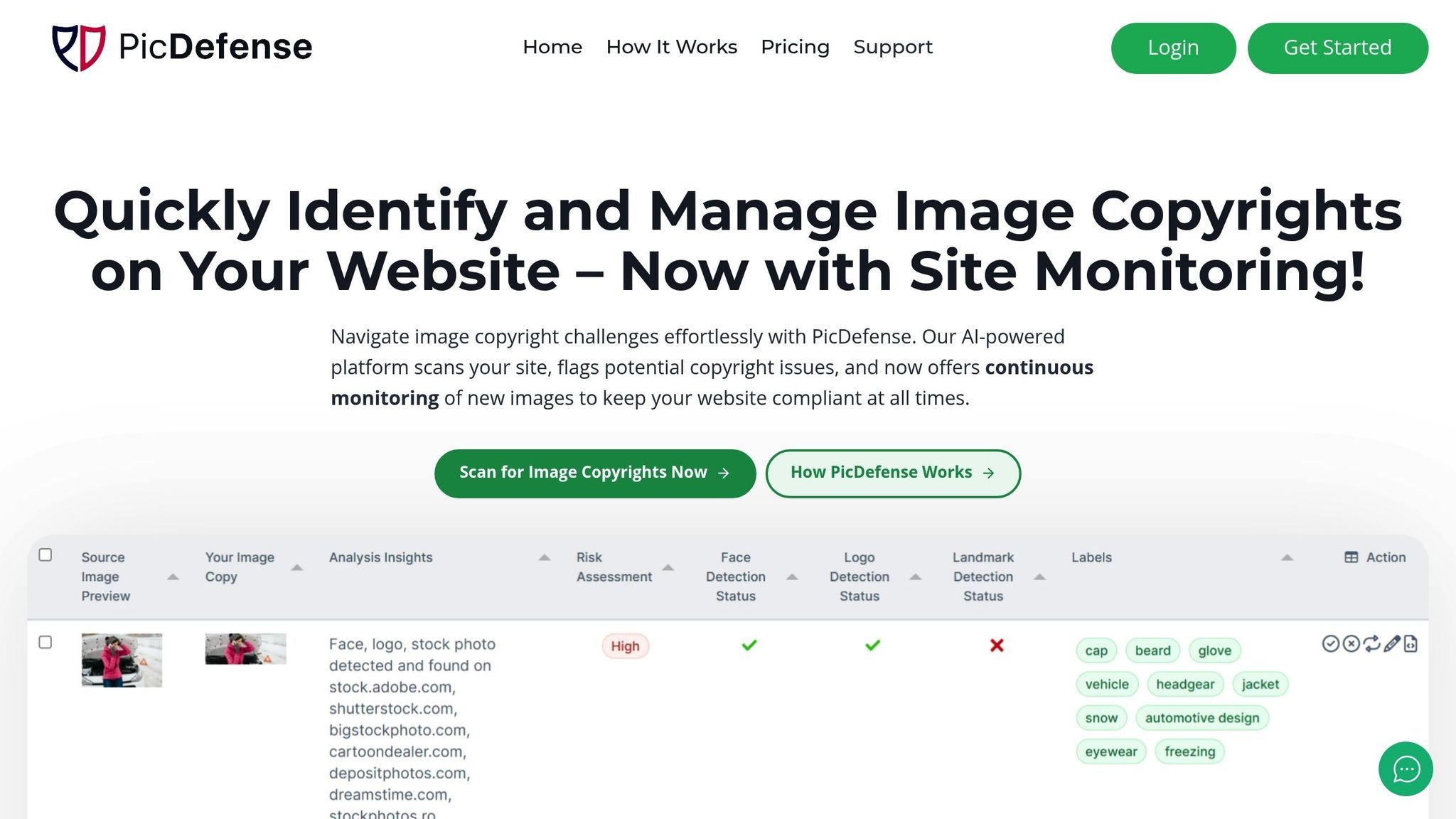
PicDefense tackles metadata conflicts with a blend of automated scanning, AI-driven analysis, and centralized documentation. It’s designed to address common challenges like incomplete records and missing licensing details efficiently.
Complete Website Scanning
The process begins with a full-site automated scan to inventory all images on your website. PicDefense crawls through every page, identifying unique images while filtering out duplicate URLs to focus on the assets that matter most.
But it doesn’t stop there. PicDefense compares your images against a massive database of over 73 billion indexed web images. Even modified or manipulated images are analyzed for precise matches. To keep up with the evolving content on your site, the platform offers weekly scans to detect newly added images. Plans start at $30 per month for 150 image analyses, with unused credits rolling over indefinitely. This ensures that new images are promptly evaluated for potential metadata issues as your site grows. After scanning, the system dives into a detailed metadata analysis to identify and resolve conflicts.
Advanced Metadata Analysis and Conflict Resolution
At the heart of PicDefense’s solution is its advanced AI-powered analysis. Each image undergoes a detailed review of its EXIF data to uncover embedded copyright information. But it goes further than basic metadata extraction. The system uses sophisticated detection tools to identify elements like faces, landmarks, and logos - factors that could increase copyright risks due to privacy laws, personality rights, trademarks, or specific copyright limitations.
The platform also flags images likely sourced from stock photo libraries and traces backlinks to uncover their origins. This helps users locate licensing sources when needed. Each image is assigned a detailed PicRisk score, providing a clear snapshot of its compliance status. Users can access the image’s EXIF data directly within the platform, along with automated keyword tagging for easier organization.
"PicDefense provides the insights you need to stay compliant - before copyright issues arise!" [1]
Risk Reduction and Compliance Documentation
A standout feature of PicDefense is its centralized documentation system. Users can log when and where image licenses were obtained, creating a comprehensive record. The platform generates reports with risk ratings, source analysis, and actionable recommendations based on EXIF metadata.
With its whitelisting feature, PicDefense simplifies future reviews by letting users mark verified images as safe. This prevents cleared images from using up credits in later scans. Users can also add notes for reference when an image’s license is confirmed. Keeping detailed licensing records allows businesses to respond quickly and confidently to any copyright claims.
"Document licensing directly in PicDefense.io, creating a robust compliance record." [1]
For businesses managing extensive image libraries or multiple websites, PicDefense offers bulk processing and team collaboration tools. Exportable compliance reports provide audit-ready documentation, helping defend against copyright claims that can range from $3,000 to $150,000 per image. By turning a reactive process into a proactive and organized system, PicDefense makes metadata conflict resolution manageable and stress-free.
Best Practices for Managing Metadata Long-Term
To ensure compliance and prevent issues down the line, long-term metadata management requires a proactive approach. Regular audits, automation, and centralized documentation are key tools to keep things running smoothly over time.
Regular Audits and Metadata Checks
Conducting regular audits is a practical way to maintain compliance without overburdening resources. These audits help identify images with missing or inconsistent metadata, verify licensing documentation, and flag potential conflicts before they become major problems.
Breaking audits into segments can improve efficiency. For instance, prioritize images that pose higher risks - such as those featuring identifiable individuals, branded products, or professional photography. By aligning audits with existing content update schedules, you can seamlessly incorporate metadata checks into regular workflows rather than treating them as separate tasks.
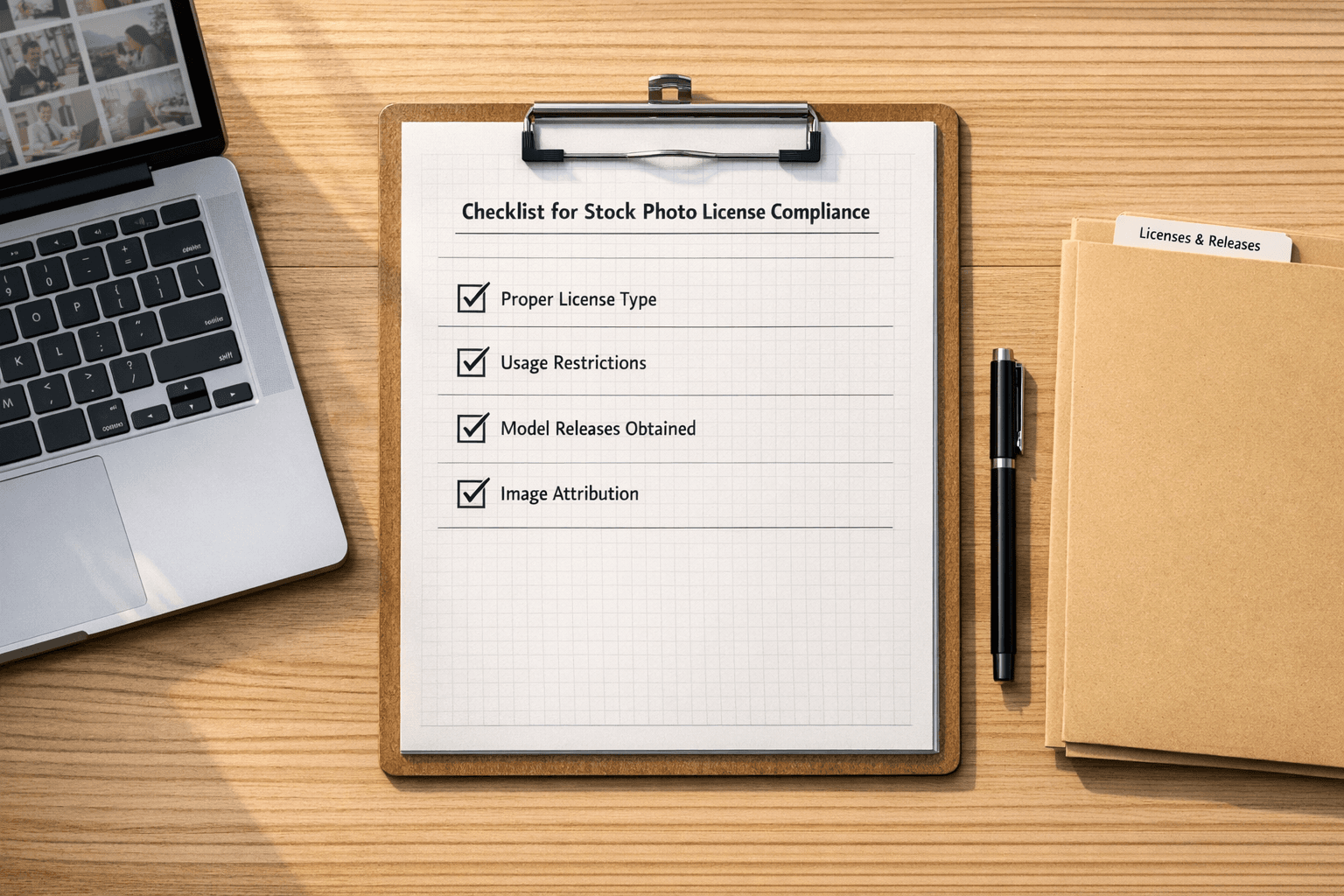
Using a standard checklist can simplify the process. This checklist might include steps to:
- Identify missing metadata.
- Verify licensing details.
- Flag conflicts, such as properly licensed images missing complete documentation.
Once gaps are identified, automation can take over to handle routine tasks and reduce manual effort.
Automating Metadata Management
Automation is a powerful tool for reducing errors in metadata management. By setting up automated workflows to capture licensing details at the time of acquisition, you can avoid the need for manual fixes later.
Automated tagging systems can fill in fields like upload date, file size, and source URL without human intervention. Advanced systems might even extract copyright information from embedded metadata and cross-reference it with licensing databases to promptly highlight any issues.
Integrating these tools with your content management system can streamline the process even further. However, when automation can’t determine an image’s licensing status, it’s better to flag it for manual review rather than risk compliance errors.
Building a Compliance Approach
Effective long-term metadata management hinges on a structured compliance strategy. Centralizing licensing documentation and usage rights is a good starting point to avoid gaps.
Training your team is equally important. Regular sessions on proper metadata practices and record-keeping ensure everyone understands their role in maintaining compliance. Make it a standard procedure to verify licenses before publishing new images, catching potential issues early.
When working with freelancers, agencies, or stock photo providers, set clear contractual expectations around metadata and licensing documentation. This helps maintain consistency and reduces the risk of errors.
Ultimately, treat metadata management as an ongoing effort rather than a one-time task. Allocate dedicated resources, periodically review procedures, and adapt to changes in technology and legal requirements to stay ahead of potential challenges.
Conclusion: Managing Metadata Conflicts for Copyright Compliance
Metadata conflicts pose a serious risk to copyright compliance, often leading to costly legal consequences. When image metadata includes missing, inconsistent, or contradictory details about ownership and licensing, it opens the door to potential copyright infringement claims. Copyright holders and their legal teams are increasingly vigilant in identifying and acting on these vulnerabilities.
The stakes are high - copyright infringement claims can cost anywhere from $3,000 to $150,000 per image, making even small mistakes potentially devastating for businesses.
Taking proactive steps to address these risks is essential. Regular audits, standardized metadata practices, and automated monitoring systems can help prevent legal disputes before they arise. Treating metadata as a key business asset, rather than an afterthought, is crucial in building a strong defense against copyright challenges.
For businesses managing large image collections, manual processes are no longer practical. This is where AI-powered tools like PicDefense come into play. These solutions automate the process by scanning websites, analyzing EXIF data, and cross-referencing images with licensing databases. What once required hours of manual effort is now streamlined into an efficient, automated system.
Centralized documentation is another critical component. Having quick access to licensing records - such as purchase receipts, agreements, and usage documentation - can make all the difference when responding to copyright claims. If a demand letter arrives, being prepared can mean resolving the issue quickly rather than facing a costly legal battle.
As copyright enforcement becomes more advanced and automated, businesses that fail to address metadata issues risk falling behind. Investing in proper metadata management tools and practices now can save substantial costs in the future. In many cases, avoiding even a single infringement claim justifies the expense.
The question isn’t whether businesses can afford to implement these practices - it’s whether they can afford not to. By prioritizing systematic metadata management, companies can protect themselves against evolving copyright challenges and safeguard their operations for the long term.
FAQs
How can businesses maintain accurate metadata to stay compliant with copyright laws?
Ensuring your metadata is accurate and complete is crucial for steering clear of copyright compliance issues. Every image you use should be thoroughly checked for its metadata, including EXIF data. This data often holds essential information like the image's copyright status, the creator's details, and its usage rights.
Conducting regular audits of your image library and updating metadata as needed can help reduce potential conflicts. Using tools designed to analyze and organize metadata can streamline this process, keeping your business protected and in line with copyright regulations.
What are the risks of not addressing metadata conflicts in digital assets?
Ignoring metadata conflicts in digital assets can have serious repercussions, including legal battles and financial penalties. Metadata carries essential details about ownership and usage rights. When this information is inaccurate, incomplete, or contradictory, it opens the door to copyright infringement claims or disputes over proper attribution.
Such issues can quickly spiral into expensive lawsuits, hefty fines, or even tarnish your brand’s reputation. Taking a proactive approach to managing metadata not only ensures compliance with copyright laws but also protects you from avoidable risks.
How can PicDefense.io help businesses address metadata conflicts and ensure copyright compliance?
PicDefense.io leverages cutting-edge AI to dig into image metadata, like EXIF data, to reveal key copyright details such as ownership and usage rights. It’s designed to spot discrepancies or missing information, helping businesses address metadata conflicts with ease.
By providing actionable insights and thorough compliance reports, PicDefense.io equips businesses to tackle copyright risks head-on, ensuring their digital content stays compliant and legally secure.
Protect your website from image copyright claims
PicDefense scans your entire website, identifies image risks, and stores proof of compliance — so you never get caught off guard.