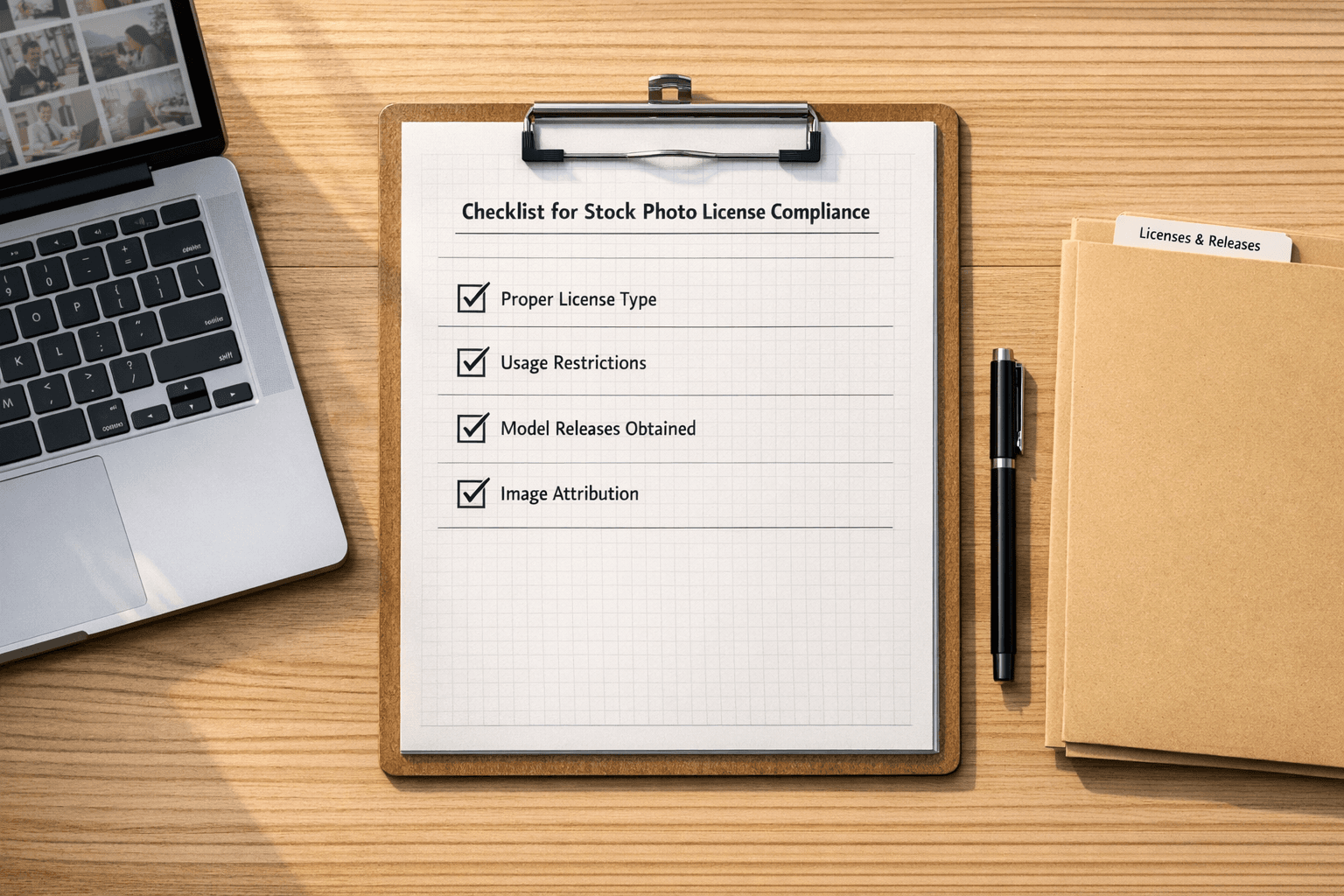
73% of businesses can't prove they have the right to use the images they publish. This oversight exposes them to legal and financial risks, including fines ranging from $3,000 to $150,000 per image. Why does this happen? Missing or incomplete licensing documentation is the main culprit.
Key challenges include:
- Lost or expired documentation: Teams lose track of where images came from.
- Decentralized storage: Files are scattered across emails, cloud drives, or local devices.
- Staff turnover: Knowledge about licenses leaves with departing employees.
- Informal agreements: Verbal permissions or handshake deals don't hold up in court.
Without proper records, businesses face lawsuits, reputational damage, and operational disruptions. Courts require detailed, timestamped proof of licensing, including original agreements, payment records, and usage terms. But most companies fall short of these standards.
Solution: Tools like PicDefense streamline image compliance by automating license tracking, centralizing documentation, and generating court-ready records. With features like full-site scanning, risk scoring, and timestamped records, businesses can protect themselves from legal claims and avoid costly settlements.
The takeaway? Proper image documentation isn't optional - it's necessary to safeguard your business.
Real Stories of Documentation Disasters
When it comes to image licensing, poor documentation can lead to serious legal and financial headaches for U.S. businesses. These real-life examples shed light on how documentation failures can expose companies to significant risks.
Case Studies of U.S. Businesses in Legal Trouble
Across different industries, sloppy record-keeping has landed businesses in hot water. For instance, restaurant chains often struggle with centralizing image licenses. Franchise locations may source images from various suppliers for local campaigns, but without a centralized system to track licenses, things can go wrong quickly. A Texas-based restaurant chain learned this the hard way, facing hefty fines after using images beyond their licensed scope.
E-commerce companies, which manage thousands of images daily, are also at risk. A California home goods retailer found itself in legal trouble when it couldn’t provide proper licensing for lifestyle images sourced from third-party vendors. The fallout? Expensive settlements and the removal of key product listings during a critical sales season.
Marketing agencies face their own challenges, especially during staff turnover. A Denver agency ran into legal issues after licensing documents were misplaced during a transition, leaving both the agency and its client unable to prove proper image authorization.
Even healthcare organizations aren’t immune. A Florida medical practice group faced legal problems when patient consultation images were used in ways that exceeded agreed-upon restrictions. This incident highlighted the risks of failing to monitor usage limitations properly.
These examples underscore how poor documentation practices can weaken a company’s ability to defend itself in licensing disputes.
Root Causes of Documentation Failures
What’s behind these costly mistakes? A closer look reveals a few common culprits:
- Staff turnover: When employees leave, they often take critical knowledge with them. If one person is responsible for managing licenses and their departure isn’t handled carefully, crucial information can be lost.
- System migrations and disorganized records: Upgrading digital asset management tools or switching cloud providers can disrupt centralized documentation. Files may get misplaced, links can break, and teams relying on scattered storage solutions - like email attachments or local drives - add to the chaos.
- Vendor changes: Shifting contacts, updated licensing terms, or new photographers can make it harder to verify old agreements, leaving businesses vulnerable.
- Short-term thinking: Teams focused on immediate projects often neglect the long-term organization of licensing paperwork, creating gaps that come back to haunt them.
- Budget constraints: Tight budgets sometimes push businesses toward informal agreements with photographers or designers. While cost-effective in the moment, these arrangements often lack the formal documentation needed to hold up in legal disputes.
Addressing these root causes requires a mindset shift. Treating image licensing as an ongoing process - not just a one-time task - can help businesses avoid these pitfalls and protect themselves from unnecessary risks.
Why 73% of Businesses Struggle to Prove Image Ownership
A surprising number of businesses - 73% to be exact - find it challenging to prove ownership of the images they use. The root of the problem often lies in gaps within their image licensing documentation, leaving them exposed to legal risks.
Many companies assume their records are sufficient until they face legal scrutiny. Understanding what courts require can help avoid expensive disputes.
Common Pitfalls in Image Licensing Documentation
One of the biggest issues stems from outdated or incomplete record-keeping methods. For example, email receipts might confirm a purchase but often lack crucial details like usage rights, duration, or geographic restrictions. Storing records in cloud systems can also backfire if employees leave or access credentials are lost.
Decentralized storage adds another layer of complication. When records are scattered across emails, project management tools, or local devices, assembling proof becomes a logistical nightmare.
Then there are informal agreements - like handshake deals or verbal permissions - which rarely hold up under legal scrutiny. The situation gets even messier when images come through multiple intermediaries. Documentation often becomes fragmented as different parties assume someone else is managing the complete record.
These gaps in documentation fall far short of the rigorous proof required by U.S. courts.
What U.S. Courts Demand as Proof
To establish image ownership, U.S. courts require detailed and thorough documentation. The gold standard is an original licensing agreement that specifies key details such as usage rights, time limits, geographic restrictions, and any other conditions. A simple email confirming a purchase won’t cut it.
Courts also look for a clear chain of custody, which tracks the image’s journey from its creator to the current user. This might include transfer documents, sublicensing agreements, or vendor contracts outlining the rights transfer process.
Payment records are another critical piece of evidence. These records must directly link payments to specific images and their licensing terms. Generic invoices labeled “marketing materials” are usually insufficient, while itemized invoices that identify individual images provide much stronger support.
Here’s a quick breakdown of what courts consider acceptable and unacceptable proof:
| Acceptable Proof | Unacceptable Proof |
|---|---|
| Original license agreements with usage terms | Email confirmations lacking detailed rights |
| Itemized invoices linking payments to individual images | Generic invoices for stock photos |
| Chain of custody documentation | Verbal agreements or informal texts |
| Vendor contracts outlining rights transfers | Screenshots of download pages |
| Timestamped download records with license details | Personal assurances without documentation |
| Formal sublicensing agreements | Handshake deals |
Courts also value contemporaneous documentation - records created at the time of the transaction. Reconstructed or retroactively compiled evidence often carries less weight, making it essential for businesses to maintain well-organized, up-to-date records.
Because the burden of proof typically falls on the business using the image, having robust documentation is not just helpful - it’s critical to avoiding legal trouble.
Building a License Vault with PicDefense

To tackle the documentation challenges faced by businesses, PicDefense offers a cutting-edge solution. With U.S. courts requiring thorough and organized documentation, companies need a reliable system to manage image licensing. PicDefense steps in as an AI-powered digital vault, purpose-built to solve the license file issues that impact 73% of businesses.
Rather than scrambling to piece together documentation after a legal demand, PicDefense proactively creates detailed records. It automates image compliance, ensuring businesses meet the rigorous standards expected in legal settings. This approach directly addresses the gaps in documentation discussed earlier.
Key Features for Simplified and Automated Documentation
PicDefense transforms how businesses handle image licensing with several standout features:
- Full-Site Scanning: The platform scans your entire website, creating an inventory of every image - whether hidden in a content management system or buried in old blog posts. This ensures no image goes undocumented.
- AI-Powered Analysis: By leveraging a database of over 73 billion indexed web images[1], PicDefense uses metadata, visual analysis, and reverse image searches to identify potential copyright risks. This automated process catches issues that manual reviews often miss.
- Weekly Updates: Automated scans run every week, capturing new images as they’re added. This ensures that even recently uploaded content is properly documented, closing gaps in licensing records.
- Centralized License Storage: Businesses can upload and organize purchase receipts, licensing agreements, and related files in one secure location. This central hub keeps all licensing information accessible and linked to specific images.
- Source Attribution Tracking: The system verifies licensing details to ensure compliance with copyright laws.
- Risk Scoring with PicRisk Ratings: To avoid overwhelming users, PicDefense prioritizes high-risk images that could lead to costly legal claims. This targeted approach allows businesses to focus on the most pressing issues.
How PicDefense Ensures Legal Defensibility
PicDefense isn’t just about organizing files - it’s designed to create records that hold up in court.
- Timestamped Records: The platform generates detailed, timestamped records during image analysis and licensing. Courts favor contemporaneous documentation over evidence reconstructed after the fact, making this feature crucial.
- Chain of Custody: PicDefense tracks each image’s journey, from detection to license verification. By linking uploaded purchase receipts and agreements to specific images, the system establishes the clear, traceable documentation courts require.
- Purchase Date Archiving: Purchase dates are recorded to provide an additional layer of legal protection. For example, if a copyright holder raises an infringement claim, timestamps that predate the image’s publication can serve as a strong defense.
- Exportable Compliance Reports: The platform generates detailed reports that are ready for legal review. These reports include itemized documentation, linking payments to specific images, usage terms, and any licensing restrictions - exactly the level of detail courts expect.
- API Integrations: Seamless integrations with tools like WordPress, Zapier, and Make.com automate compliance documentation, reducing the risk of human error and ensuring consistent record-keeping.
- Whitelist Functionality: Once an image’s licensing is verified, it’s added to a whitelist. This prevents redundant checks while maintaining organized records, making ongoing compliance management more efficient.
PicDefense not only simplifies the process of managing image licenses but also ensures businesses are well-prepared to meet legal demands with confidence.
sbb-itb-59d21f2
What U.S. Courts Accept as Proof - and How to Prepare
When copyright disputes land in U.S. courts, the difference between a strong defense and a costly settlement often comes down to detailed, time-specific proof of legitimate image ownership. Courts follow strict documentation standards, and businesses that can’t meet these expectations may find themselves at a serious disadvantage. Knowing what documentation courts accept - and how to prepare it - can safeguard your business.
U.S. courts place a premium on contemporaneous documentation, meaning records created at the time of purchase or licensing, not hastily assembled after receiving a legal demand. Courts also require a clear chain of custody that links your payment directly to the specific image in question, with timestamped proof that predates its publication. Without this, businesses may struggle to prove they acted within their rights.
The most persuasive evidence includes original purchase receipts with timestamps showing the transaction occurred before the image was published. Copyright holders often use tools like archive.org to argue an image appeared online before you purchased it. In these cases, having documentation of the purchase date becomes your best defense. However, it’s important to remember that paying for an image typically grants usage rights - not ownership. Without a clear record of the license terms, businesses may find it difficult to prove they stayed within the boundaries of their agreement.
Checklist for Audit-Ready Documentation
To meet the high standards U.S. courts expect in copyright disputes, your image licensing records need to be thorough and well-organized. Here’s a checklist to ensure your documentation is ready for scrutiny:
- Purchase Documentation: Save original receipts, invoices, and payment confirmations for every licensed image. These should include purchase dates, transaction amounts, and clear identification of the images purchased. Keep digital copies in multiple secure locations for added protection.
- License Agreements: Store complete copies of all licensing agreements, including terms of use, restrictions, and permitted usage scenarios. Avoid relying solely on confirmation emails, as they often omit critical details buried in linked agreements that may not be accessible later.
- Image-to-License Linking: Ensure there’s a clear connection between each image file and its corresponding license documentation. This could involve matching file names, purchase order numbers, or other identifiers that tie your payment to a specific image.
- Metadata Preservation: Retain original EXIF data and file information whenever possible. This technical data can serve as additional evidence of legitimate acquisition.
- Usage Records: Document when, where, and how each image is used across your digital properties. Courts may scrutinize whether your usage aligns with the terms of your license, making this information critical.
- Archive Verification: Use tools like archive.org to document the timeline of your image usage. Independent proof of usage dates can strengthen your case.
- Renewals and Expirations: Track license terms, renewal dates, and any usage limitations. Details like extended licenses, commercial use rights, and geographic restrictions can all impact your legal standing.
- System Management: Store your documentation in multiple locations, including cloud storage, local drives, and physical backups. Regularly review your image inventory and documentation - quarterly audits can help you spot and fix gaps before they become legal risks.
The key to building court-ready documentation is consistency and completeness. Courts are more likely to side with businesses that show systematic compliance efforts rather than those scrambling to assemble evidence after receiving a demand letter. By maintaining timestamped records that link payments, licenses, and usage rights, you’ll be better equipped to protect your business against copyright claims and avoid unnecessary settlements.
Conclusion: Avoiding the License File Problem
As mentioned earlier, relying on scattered documentation and manual tracking leaves businesses vulnerable to costly legal disputes. The risks are substantial, with potential penalties ranging from $3,000 to $150,000 per image, affecting 73% of businesses.
Copyright claims are almost unavoidable. Even companies that use licensed stock photos can find themselves at risk if they lack proper, timely documentation. Tools like Archive.org timestamps, EXIF data analysis, and reverse image searches have made it easier than ever for copyright holders to build strong cases against businesses that are unprepared.
To safeguard against these risks, businesses need a solid system for managing licenses. This means creating a centralized, defensible vault that links every image to its purchase record, license terms, and usage history. Manual tracking simply cannot keep up, leaving room for errors. The most effective approach combines automated risk detection with centralized license management, ensuring compliance without the chaos of manual processes.
Key Takeaways for Businesses
The legal challenges tied to poor license management call for immediate and proactive action. Businesses that document their compliance efforts from the start fare far better than those scrambling to gather evidence after receiving a claim. Courts tend to favor companies that show a systematic approach to compliance over those that appear disorganized.
Establishing clear processes for acquiring images, storing licenses, and tracking usage is critical. Knowing what courts expect allows businesses to focus their compliance efforts on the most important areas. While an audit-ready checklist can provide a helpful framework, the real challenge is maintaining these standards consistently across all digital assets.
"PicDefense also enhances legal documentation by automatically recording key details like metadata, license dates, usage rights, and image sources."
– PicDefense.io [2]
Platforms like PicDefense tackle the scalability issue by automating risk detection and centralizing license management. With features such as automated site scanning, license storage, and continuous monitoring, these tools allow businesses to stay compliant without overburdening their teams [1].
The takeaway here is that image compliance isn't about perfection - it's about preparation and organization. Companies that invest in systematic documentation and automated monitoring tools are far better equipped to handle copyright challenges. On the other hand, those relying on scattered files and unreliable memory put themselves at unnecessary risk.
The license file problem requires businesses to rethink how they manage digital assets. In a time when copyright enforcement is becoming more automated and aggressive, the companies that succeed will be those that treat image compliance as a core part of their operations, not an afterthought.
FAQs
What risks do businesses face if they can’t prove ownership of their images?
Failing to prove ownership of images can lead to serious legal and financial troubles for businesses. On the legal side, companies risk facing copyright infringement lawsuits, where damages can range from $750 to $30,000 for each violation. If the infringement is found to be intentional, the penalties can climb even higher. Add in legal fees and settlements, and the total cost can easily reach hundreds of thousands of dollars.
But the consequences don’t stop with financial losses. Businesses could also be hit with cease-and-desist orders, experience harm to their reputation, and even face penalties from platforms where their content is hosted. For small and medium-sized businesses, these challenges can be particularly overwhelming, making it essential to properly document image ownership to steer clear of these risks.
How can businesses securely manage and document their image licenses?
To keep image licenses in check, businesses should set up a centralized, secure system to store all related documentation - think agreements, receipts, and communication records. This system should also include digital backups with clear timestamps and metadata, making it easy to verify and organize records.
Another key step is tracking usage rights, such as expiration dates and approved uses, to prevent accidental misuse. Keeping records updated and ensuring they align with legal standards recognized by U.S. courts - like signed agreements and time-stamped digital files - provides strong evidence of ownership and compliance. Taking these steps can help businesses safeguard their assets and steer clear of expensive legal issues.
How does PicDefense help businesses securely manage and prove their image licenses?
PicDefense provides a range of tools aimed at making image license management both easier and more secure. Its features include automated website scans to spot potential licensing problems, risk scoring to evaluate vulnerabilities, metadata analysis to confirm image details, and license documentation logging to keep a clear record of ownership.
With these tools, businesses can effectively track licensing details, verify ownership, and compile solid proof of compliance. This minimizes legal risks while ensuring that all image rights are properly documented.
Protect your website from image copyright claims
PicDefense scans your entire website, identifies image risks, and stores proof of compliance — so you never get caught off guard.