Imagine receiving a $25,000 demand letter for copyright infringement over an image you thought was legally licensed. The culprit? A mismatch between your licensing records and an earlier timestamp from Archive.org's Wayback Machine. This scenario is becoming increasingly common as copyright enforcers use archived website snapshots to challenge businesses' image usage.
Here’s what you need to know:
- Archive.org timestamps are used as evidence: Courts often accept Wayback Machine records to establish when content was online, which can undermine your defense if your licensing date doesn’t align.
- Poor documentation increases risks: Without timestamped purchase records and clear licensing terms, businesses often settle claims to avoid costly legal battles.
- AI tools fuel copyright claims: Automated image scanning technology makes it easier for claimants to identify potential violations and issue demand letters.
To protect yourself, maintain organized, timestamped records of all image licenses, formatted to U.S. legal standards. Tools like PicDefense can help centralize and automate compliance, ensuring you're prepared to counter timestamp-based claims effectively. Don’t wait for a legal dispute - take preventive action now to avoid costly mistakes.
How Copyright Trolls Use Archive.org Against You

Some copyright claimants have discovered how to turn the Wayback Machine into a tool for targeting businesses. By digging through archived snapshots of websites, they build cases that could cost you thousands of dollars - even if you’ve legally licensed the images in question. Knowing how these tactics work is key to protecting your business.
Here’s how it often plays out: they identify an image on your website, then head to Archive.org to find the earliest snapshot where that image appears. This is where the so-called "snapshot trap" comes into play.
The Snapshot Trap: Using Archived Dates as Evidence
The "snapshot trap" is a strategy where claimants use the date of the earliest archived snapshot as proof of when an image was publicly available on your site. This date is then presented as evidence that the image was used without proper authorization - regardless of when you actually obtained the license.
The problem? The Wayback Machine doesn’t track when content was legally acquired. It only shows when the content appeared online. This makes it difficult to prove compliance after the fact. If you licensed the image after the snapshot date, the archived evidence can still be used against you.
U.S. courts have even admitted Wayback Machine archives as evidence, especially when there’s no other timestamped documentation to dispute the claim. This legal precedent gives claimants a powerful advantage during settlement talks, as the archived dates can carry significant weight in court[1].
Adding to the complexity, the Wayback Machine’s technical limitations can be misleading. Sometimes, archived pages link to live web content if the original file is missing. This means the date shown in the archive might not reflect when the content was actually uploaded, further complicating the situation[2].
Costly Claims: How Timestamp Evidence Puts Businesses at Risk
Businesses are particularly vulnerable in several scenarios where archived timestamps are used to support copyright claims. Visual media - like photos, illustrations, and graphics - are especially risky if sourced from stock libraries, freelancers, or third-party contributors without solid documentation[1].
For example, hiring a freelancer without verifying their licensing process can backfire. If the freelancer failed to secure proper rights for an image, and a Wayback Machine snapshot shows that image on your site before you can provide proof of purchase, you could be facing a hefty settlement demand. Some claimants have sought as much as $25,000 per image based solely on archived evidence[1].
Common missteps - such as poor documentation, unverified licenses, or infrequent audits of your content - can leave you exposed. These oversights make it easier for claimants to use Wayback Machine snapshots to argue unauthorized use of images[1].
Since 2003, archived evidence from the Wayback Machine has been used in numerous copyright and intellectual property cases in the U.S. One notable case, Playboy Enterprises v. Cavalluzzo (2003), showcased how archived web pages could establish trademark use and priority[2].
The financial consequences of these claims are far from trivial. Faced with settlement demands and lacking timestamp-proof documentation, many businesses choose to settle rather than endure the costs and risks of a legal battle. This highlights the critical importance of maintaining thorough, timestamped records to protect your business from potential claims.
Why Purchase Dates and Documentation Matter
When you're hit with a copyright claim using Archive.org timestamps as evidence, your purchase records become your best line of defense. The difference between having well-organized documentation and scrambling to find scattered files can mean the difference between quickly resolving the issue or facing a hefty settlement demand - sometimes as high as $25,000.
Take this example from July 2023: a U.S. e-commerce retailer received a $15,000 demand after a copyright claim surfaced. The issue? A stock image they used appeared in a 2018 Wayback Machine snapshot. Without a timestamped purchase receipt to prove legal licensing, they had no solid defense. After months of expensive back-and-forth negotiations, they ended up settling for $8,500. This costly outcome could have been avoided with proper documentation in place[2].
In the U.S., courts require businesses to prove they held valid licenses when they first used an image. Claimants often use Archive.org snapshots to create a timeline, and without timestamped records, you’re left at a disadvantage. This case highlights why having meticulous, timestamped purchase records is critical for protecting your business.
Weak vs. Strong Documentation Strategies
With Archive.org timestamps posing a real threat, how you manage your image licenses and purchase records is more important than ever. Many businesses make common mistakes that leave them exposed when legal claims arise.
| Strategy | Risk Level | Defense Strength | Typical Outcome |
|---|---|---|---|
| Weak: Scattered files/memory-based | High | Difficult to defend | Delays, higher settlement costs |
| Strong: Centralized, timestamped records | Low | Strong and effective | Faster resolution, lower costs |
Weak documentation often looks like this: receipts buried in random email folders, relying on team members' memories about when licenses were purchased, or keeping informal records without proper timestamps. This approach leaves businesses vulnerable, as seen in the Healthcare Advocates case. Poor documentation allowed opposing counsel to exploit gaps in their records, leading to additional legal claims and complications. What began as a single image dispute spiraled into multiple legal issues simply because their records weren’t audit-ready[1].
On the other hand, strong documentation involves centralized systems where every image license is backed by purchase receipts, license agreements, and correspondence with licensors. For example, in 2022, a marketing agency avoided a $12,000 claim by producing a timestamped license agreement showing they purchased the disputed image on 04/15/2017. Since this predated the Wayback Machine snapshot, the claim was immediately dropped[2].
The Legal Weight of U.S.-Formatted Purchase Dates
Strong documentation isn’t just about keeping records - it’s about keeping them in the right format. U.S. courts have specific expectations for how purchase dates and other details should be documented. The MM/DD/YYYY date format isn’t just a preference; it’s a legal standard that can make or break your case.
When courts review timestamps to establish ownership timelines, properly formatted dates eliminate ambiguities. For instance, a receipt showing "04/15/2017" holds far more weight than one that vaguely states "sometime in April 2017." If your purchase receipt is clear, timestamped, and formatted correctly, it becomes much harder for claimants to argue against your defense.
Here’s why this matters: if a Wayback Machine snapshot shows your image online on 03/20/2017, but your receipt says 04/15/2017, you’re facing a potential infringement claim. However, if your receipt shows 02/10/2017, formatted in MM/DD/YYYY, and includes full licensing terms, you’ve got solid proof that predates the snapshot.
Unfortunately, many businesses aren’t prepared. Reports show that over 60% of U.S. small businesses struggle to locate image licenses or purchase records when these claims arise. This often forces them into settlements ranging from $3,000 to $25,000 per image[2].
To protect yourself, your purchase records should include the following:
- Dates in the MM/DD/YYYY format
- The full legal name of the licensor
- Specific license terms
- Exact image file names
Records that are clear, timestamped, and properly formatted are your best defense against timestamp-based claims. They ensure you’re prepared to counter any disputes effectively and avoid unnecessary legal costs.
sbb-itb-59d21f2
Building Timestamp-Proof Documentation with PicDefense
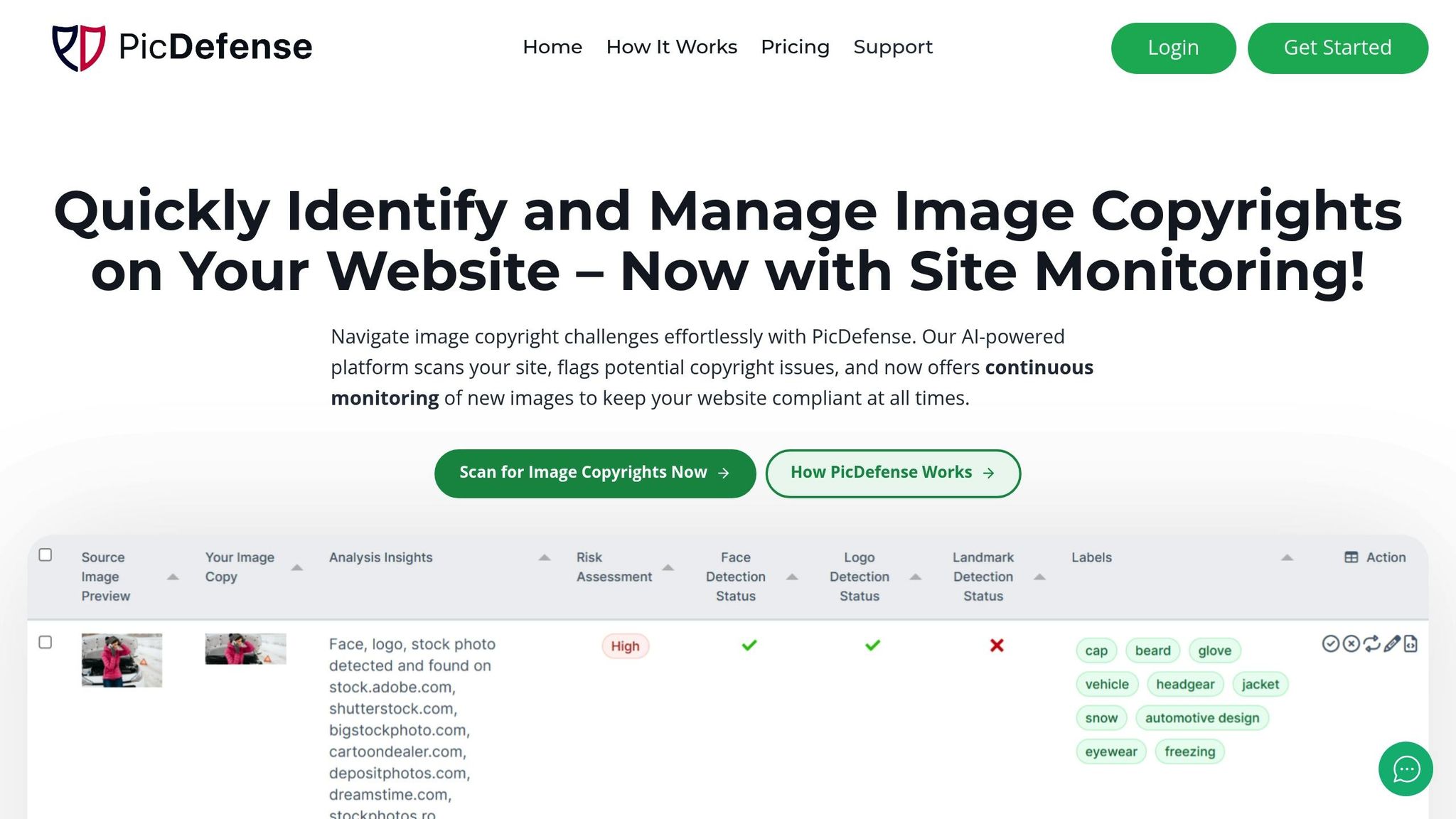
When it comes to the risks posed by Archive.org timestamps, weak documentation can lead to costly legal settlements. For U.S. businesses, having a systematic, audit-ready approach to image compliance is essential. PicDefense offers a way to create timestamp-proof defense records from the very beginning.
Centralizing Compliance Records
One of the best ways to guard against Archive.org claims is by centralizing your image licensing records. Scattered and disorganized records are a goldmine for copyright trolls, but a centralized compliance hub can eliminate that vulnerability.
PicDefense provides a streamlined solution, creating a single inventory of your images with all licensing details documented in one place. This system ensures that your records are formatted to meet U.S. legal standards.
"Document licensing directly in PicDefense.io, creating a robust compliance record." [4]
The platform also features a whitelist tool to manage images that are already legally owned or licensed. Once an image's licensing status is verified, it’s marked as compliant, saving time during future scans. The ability to view EXIF metadata, including timestamps, further strengthens your records, making them more resistant to timestamp-based claims.
Let’s take a closer look at how automation enhances this process.
Using AI for Compliance Automation
Manually checking compliance for every image is not only tedious but also prone to errors, especially for websites with extensive image libraries. PicDefense’s AI steps in to simplify the process by scanning images, reviewing EXIF data, and flagging potential compliance risks. It even suggests original licensing sources for flagged images.
This automation doesn’t replace human oversight but complements it. The AI identifies risks and provides suggestions, while you confirm and document the actual licensing details. The result? A faster, more accurate compliance process.
The platform’s Smart Rules feature takes automation to the next level by allowing you to create workflows for common compliance scenarios. For instance, you can set up rules to automatically flag images from specific sources or tag images with particular characteristics for review. This proactive approach helps catch compliance issues before they become problems, even as your website evolves.
"Keeping documentation helps you respond quickly if you ever receive a copyright claim." [4]
This combination of automation and oversight ensures that your compliance records are both thorough and efficient, paving the way for generating legal-ready documentation.
Protection with Audit-Ready Reports
When faced with claims citing Archive.org timestamps, having court-ready reports can make all the difference. PicDefense generates detailed compliance reports that include everything from risk assessments and image sources to metadata insights. These reports serve as comprehensive legal documentation, formatted to meet U.S. court standards.
Each report includes critical details like the full legal name of licensors, specific license terms, and exact image file names. The MM/DD/YYYY date format and organized presentation of data further ensure that your documentation is ready to counter timestamp-based claims effectively.
PicDefense also uses a risk scoring system, known as PicRisk ratings, to help you prioritize which images need immediate attention. This systematic approach ensures that your compliance efforts are not just thorough but also actionable.
"PicDefense.io offers more than risk assessment; it's a comprehensive toolkit for achieving and showcasing image copyright compliance." [4]
The platform’s exportable reports provide professional, court-ready documentation at the click of a button. Instead of scrambling to gather files under tight deadlines, you’ll have everything prepared in advance. This level of preparation can mean the difference between resolving a claim quickly and enduring a lengthy, expensive legal battle.
Conclusion: Avoiding the $25,000 Mistake
As discussed earlier, documentation challenges in copyright defense are no small matter. With Archive.org timestamps now serving as critical evidence in litigation, businesses must act swiftly to ensure their records are airtight.
Key Takeaways for U.S. Businesses
Archive.org timestamps hold significant weight in copyright disputes, and poor documentation can lead to expensive claims[1]. U.S. courts have consistently accepted these timestamps as evidence, making it essential to maintain records with clear MM/DD/YYYY dates and detailed purchase information[2]. Without this, businesses risk being unprepared to counter claims effectively.
In past cases, the absence of proper documentation has left defendants vulnerable to costly legal battles[1]. Under U.S. copyright law, works are presumed protected unless proven otherwise, meaning the burden falls on the defendant to demonstrate authorized use[3]. This reality highlights the importance of taking proactive steps to protect your business.
Why Prevention Always Beats Reaction
The best defense against expensive claims is a proactive one. Organized, up-to-date documentation not only reduces risk but also minimizes potential penalties[1]. Waiting until a claim arises to gather evidence often leads to incomplete records and increased costs. Relying solely on website timestamps or informal records can expose businesses to statutory damages that may exceed $25,000 per claim[1].
Tools like PicDefense can simplify compliance by automating the collection and organization of purchase and license records. These tools ensure your documentation is properly timestamped and formatted to meet U.S. legal requirements, helping you avoid financial and reputational fallout.
Start by auditing your content licenses, timestamping all purchase records, and implementing automated compliance checks. Regularly update and review your documentation to stay protected as your business grows.
Archive.org timestamps are poised to remain a key element in copyright enforcement. The real question isn’t whether your business will face timestamp-related claims, but whether you’ll be ready when it happens. Avoiding the $25,000 mistake starts with taking preventive action now. Audit your records, automate your processes, and educate your team to ensure every asset is ready for scrutiny. Preparation today could save you significant costs tomorrow.
FAQs
How can businesses protect their image licenses from copyright claims based on Archive.org timestamps?
To protect your image licenses from copyright claims linked to Archive.org timestamps, it's crucial to have clear, timestamped documentation. Use a trusted digital timestamping service to create tamper-proof records showing when you obtained your images or licenses. This provides solid proof of ownership or licensing dates.
In addition, maintain thorough records of all licensing agreements. This includes purchase dates, terms, and any related communication. Keeping this documentation secure and well-organized makes it much easier to defend your rights and respond to copyright claims. Staying consistent and methodical in your record-keeping is essential for protecting your intellectual property.
What role do Archive.org timestamps play in copyright disputes?
Archive.org timestamps, like those from the Wayback Machine, can be incredibly useful in copyright disputes. They often serve as evidence to show when digital content was created or altered. Courts may use these timestamps to establish a timeline, but their reliability might come into question if there’s any indication of errors or tampering.
While timestamps can bolster your argument, their impact hinges on their credibility and how well they’re presented. To make your case stronger, it’s a smart move to pair these timestamps with timestamp-proof documentation that confirms the origin and ownership of your content. Taking this extra step can help safeguard your intellectual property and reduce potential risks.
How can I improve my image license documentation to avoid expensive copyright disputes?
To steer clear of expensive copyright issues, it’s essential to keep thorough and well-organized records for all your image licenses. Use a centralized system to track important details like purchase dates, license terms, permissions, and expiration dates for every image you utilize. Be sure to note the source and type of license - whether it’s a Creative Commons license or a stock photo agreement - and always provide proper attribution when it’s required.
Make it a habit to regularly review your records to confirm they’re current and accurately reflect any updates, such as renewals or changes to terms. It’s equally important to train your team on copyright rules to reduce the chances of accidental misuse of images. Staying organized and fostering awareness are your strongest tools to protect against legal challenges.
Protect your website from image copyright claims
PicDefense scans your entire website, identifies image risks, and stores proof of compliance — so you never get caught off guard.