Here’s what to look for in a copyright risk tool:
- AI-powered monitoring to detect issues, even in modified images.
- Reverse image search to trace image origins and usage.
- License tracking for audit-ready documentation.
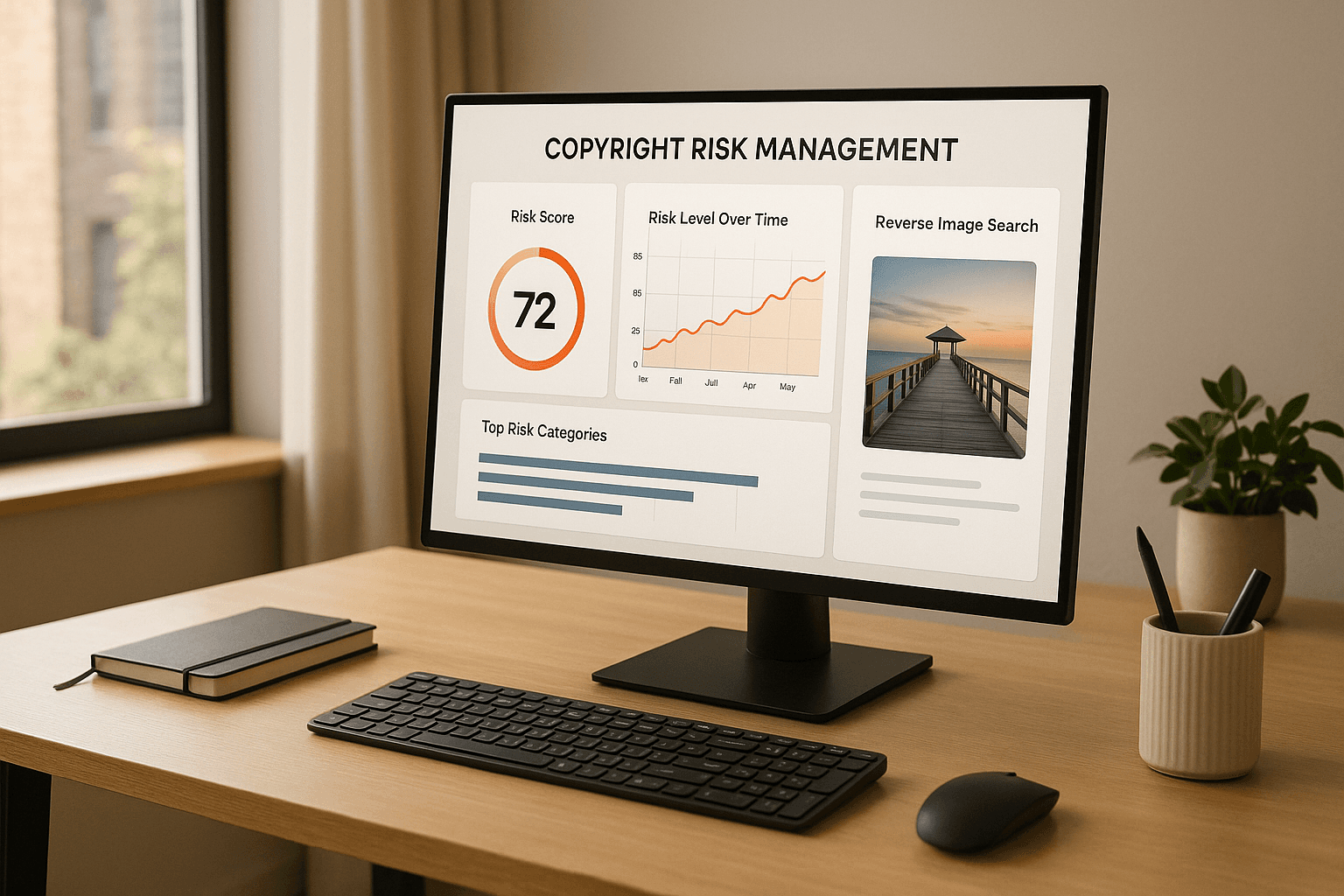
- Risk scoring to prioritize urgent issues.
- Integration options like WordPress plugins or API access for smoother workflows.
Top Tools:
- PicDefense: AI-driven with 73 billion indexed images, reverse search, risk scoring, and integration options.
- Pixsy: Best for photographers, offering reverse search and legal enforcement tools.
- Copytrack: Focuses on recovering licensing fees but lacks detailed feature transparency.
- PlagScan: Primarily for document plagiarism, with limited image compliance features.
- TinEye: A simple reverse image search tool, useful for tracking but not for ownership verification.
Quick Comparison:
| Tool | Key Features | Best For | U.S. Legal Relevance |
|---|---|---|---|
| PicDefense | AI scanning, risk scoring, license tracking | Businesses managing large content libraries | High |
| Pixsy | Reverse search, legal case management | Photographers, artists | High |
| Copytrack | Licensing fee recovery, global tracking | Revenue recovery | Moderate |
| PlagScan | Document plagiarism detection | Educational use | Low |
| TinEye | Reverse image search | Image tracking | Low |
Takeaway: Staying compliant saves money and protects your reputation. Tools like PicDefense offer an efficient way to manage copyright risks, especially for businesses juggling multiple assets. Don’t wait - start managing your risks today.
Key Features to Look for in Copyright Risk Tools
When choosing a copyright risk tool, certain features can make all the difference between simply reacting to issues and actively preventing them. The best tools combine automation, AI-powered analysis, and detailed documentation to create a strong defense against copyright claims. Here’s what to look for when evaluating these tools.
Automated, continuous monitoring is a must-have. Advanced AI can detect copyright issues even in modified images by comparing them against massive databases. For instance, PicDefense scans images against a staggering 73 billion indexed images [1]. These tools often analyze EXIF metadata and identify critical elements like faces, landmarks, and logos to flag potential risks.
Reverse image search is another key feature. It helps trace an image's origins and tracks its distribution across the web. A reliable tool can even identify edited or manipulated versions of an image, giving you the insights needed to assess and mitigate risks. To make the process even smoother, tools with integrations - such as WordPress plugins, API access, or compatibility with platforms like Zapier and Make.com - can streamline compliance workflows.
Risk scoring adds another layer of utility. Tools that provide clear, actionable insights allow you to focus on the most pressing issues. For example, they might highlight images that need immediate attention and even suggest alternative options when necessary.
For U.S. businesses, license management and documentation are critical. A good tool will let you log where licenses were obtained, along with purchase dates and source details. This documentation is invaluable when addressing copyright claims or building a compliance defense. Proper license tracking also feeds into risk scoring, helping you prioritize and act more effectively.
"No tool can guarantee 100% accuracy because copyright depends on licensing rights, permissions, and context. A flagged image isn't always copyrighted, and an unflagged image isn't always safe." - PicDefense.io
Advanced detection capabilities take things further by analyzing EXIF data and evaluating backlinks to assess copyright status and track usage patterns. These features enable businesses to respond quickly to potential infringements.
Image cataloging and whitelisting simplify compliance over time. By creating a complete inventory of your site's images, these tools let you document cleared images and whitelist them to avoid redundant checks in future scans. Compatibility with various formats like JPEG, PNG, WEBP, and GIF ensures the tool can handle all your needs, offering comprehensive protection.
Finally, detailed reporting capabilities are essential. The best tools provide reports that include risk scores, source analysis, and actionable recommendations, equipping you with the information needed for sound decision-making and legal protection.
1. PicDefense
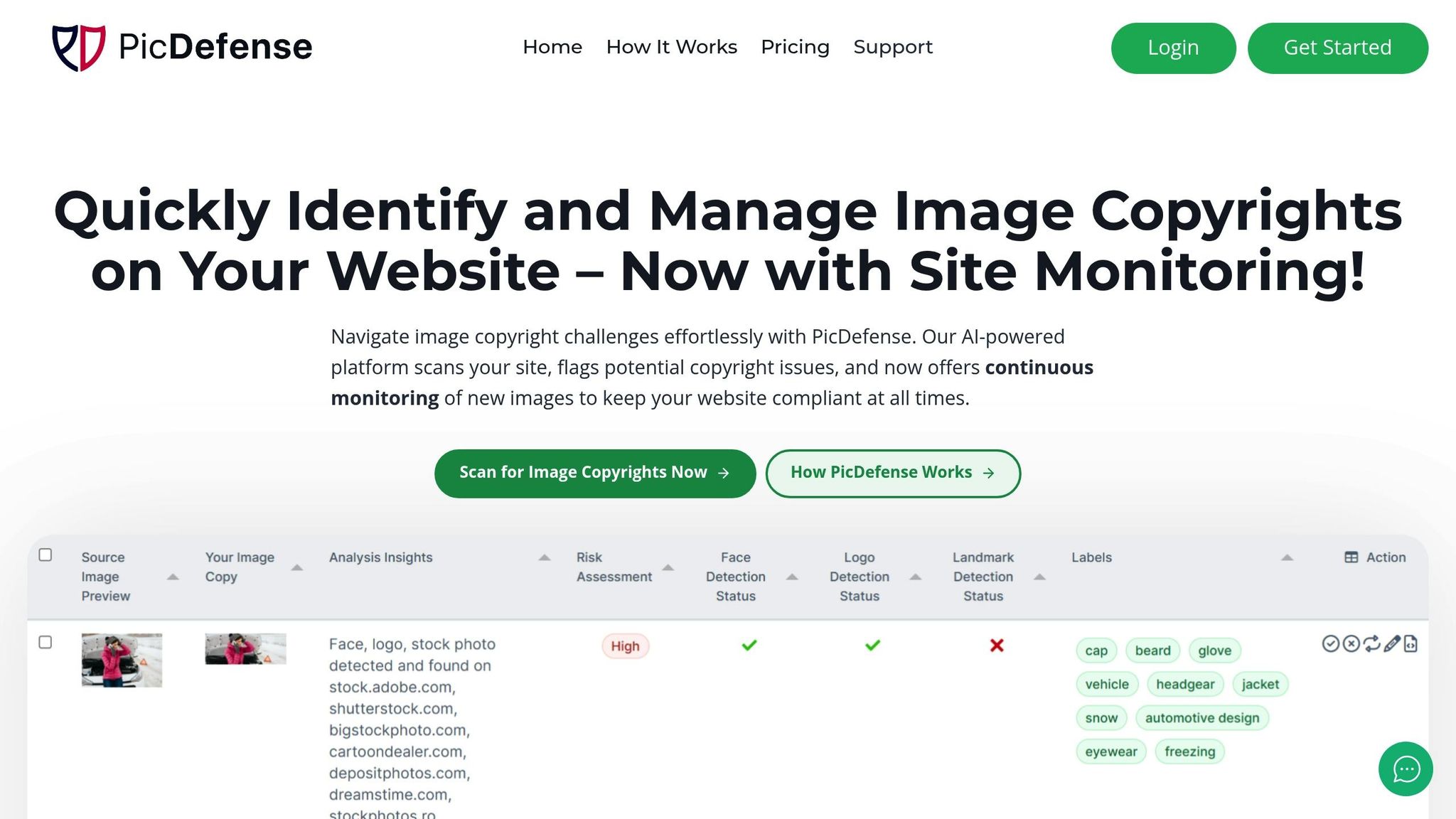
PicDefense is an AI-driven platform designed to simplify copyright risk management, turning it into a proactive and efficient process. Acting as a centralized hub for digital asset management, it allows website owners and businesses to document, track, and verify image ownership before any issues arise. Here's how PicDefense's key features make compliance and risk management more manageable.
Automated Image Scanning and Inventory Creation
PicDefense takes the hassle out of manual image tracking by automatically scanning entire websites to compile a comprehensive inventory of images. This full-site scanning feature creates a catalog that serves as the backbone for ongoing compliance efforts. It supports common image formats and continuously updates by checking for new images on a weekly basis - keeping your records current without extra effort.
AI-Powered Risk Analysis
Using advanced AI capabilities, PicDefense goes beyond basic image matching to perform in-depth risk assessments. It analyzes EXIF metadata to uncover copyright details and better understand an image's background. The platform also flags potential risks by identifying elements like faces, landmarks, or logos within images. Additionally, it detects images that may have originated from stock photo databases and assigns keyword labels to improve catalog organization and search functionality.
"Our AI checks images against an extensive database of 73 billion images, even if they've been modified or resized, flagging potentially copyrighted images." - PicDefense.io
Reverse Image Search and Source Attribution
PicDefense uses its vast database to conduct reverse image searches, matching images against billions of sources online. Even if an image has been resized, cropped, or altered, the platform can trace its origins. This feature also includes backlink analysis, helping businesses document and verify proper usage of images with defensible evidence.
Integration Capabilities
PicDefense integrates seamlessly into various business environments to streamline copyright compliance workflows. A WordPress plugin allows direct integration with WordPress sites, scanning images within the Media Library and offering an automatic "Replace Image" feature to swap flagged content. For more customized needs, API access enables developers to incorporate PicDefense's tools into existing systems. Additionally, its Zapier integration connects with thousands of apps, automating compliance tasks across multiple platforms. These integration options ensure efficient management of compliance processes across multiple client sites.
2. Pixsy
Pixsy is designed to support photographers, artists, and content creators in safeguarding their image rights. While specific integration details aren't publicly available, you can reach out to Pixsy directly to learn how it fits into your workflow.
Now, let’s dive into another tool known for its robust compliance capabilities.
3. Copytrack
Next up, let's take a closer look at Copytrack and how it fits into the realm of copyright risk management. Unfortunately, there's not much verified information available about its specific capabilities in this area. Key features such as image rights management, reverse image search, AI-based risk assessment, or integration options aren't clearly detailed in the sources we've reviewed. This lack of transparency sets it apart from other tools that offer more comprehensive disclosures. For the most accurate and up-to-date information, it's best to check out Copytrack's official documentation directly.
sbb-itb-59d21f2
4. PlagScan
PlagScan doesn't provide much clarity when it comes to managing image copyrights. Its public resources leave out crucial details about features like automated image scanning, AI-driven analysis, and integration options. This lack of information makes it challenging for businesses to determine whether the tool supports essential compliance tasks, such as scanning images for copyright issues, identifying risks using AI, or integrating with existing workflows to simplify processes.
If you're considering PlagScan, it's worth reaching out to the company directly or digging deeper to understand how well it fits your specific copyright compliance requirements. Comparing it with other tools that clearly document their features can also help you make a more informed decision.
Up next, we'll look at how TinEye handles prioritizing copyright risks.
5. TinEye
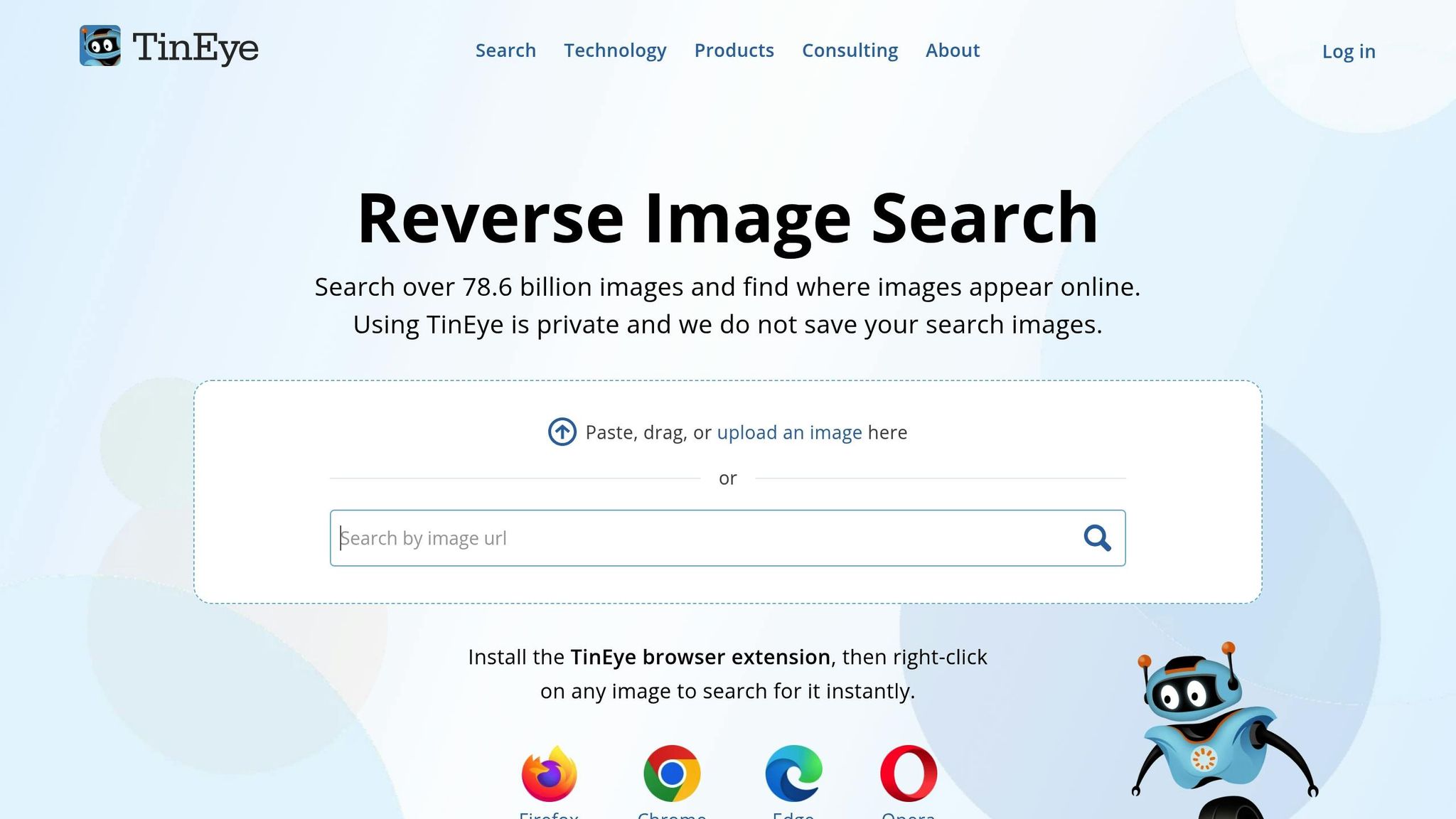
TinEye is a reverse image search tool that helps you track where an image appears online. By uploading an image, you get a list of websites where it’s been used, giving you a quick snapshot of its digital footprint.
While TinEye can reveal where an image is being used, it doesn’t confirm ownership. For copyright concerns, you’ll need to dig deeper to verify who actually owns the image. This tool is a great starting point for identifying images that might require further investigation, especially when assessing potential risks.
Feature Comparison Chart
When it comes to addressing copyright risks, having the right tools can make all the difference. These tools need to do more than detect issues - they should simplify compliance and help businesses stay ahead of potential legal troubles. Below is a breakdown of how each tool measures up in terms of features and compliance benefits in the U.S.
| Tool | Key Features | Compliance Advantage | Integration/Automation | U.S. Legal Relevance |
|---|---|---|---|---|
| PicDefense | AI-powered scanning, EXIF metadata analysis, face/logo detection, reverse image search, risk prioritization, license documentation hub | Proactive risk prevention with defensible documentation; helps avoid $3,000-$150,000 per infringement claim | WordPress plugin, API access, Zapier integration, Make.com automation | Strong - maintains audit-ready records for DMCA compliance and copyright defense |
| Pixsy | Reverse image search, takedown notice automation, legal case management, settlement tools | Reactive enforcement to protect owned images from unauthorized use | API access, webhook support | High - specializes in U.S. copyright law enforcement and litigation support |
| Copytrack | Global image tracking, automated cease-and-desist letters, licensing fee collection, usage analytics | Revenue recovery from unauthorized image usage through automated legal processes | API for enterprise clients, third-party integrations | Moderate - operates internationally but includes U.S. copyright enforcement |
| PlagScan | Document and image plagiarism detection, batch processing, educational focus | Content verification for academic and professional use with originality checking | LMS integrations, API access for educational platforms | Limited - primarily educational use, less focused on commercial copyright issues |
| TinEye | Reverse image search, usage tracking, image matching algorithms | Discovery tool for identifying where images appear online | API access, search functionality | Low - identification only, no compliance guidance or legal framework |
Pricing and Risk Prioritization
Pricing structures vary among these tools. For example, PicDefense offers a credit-based model starting at $20 for 100 scans, with monthly plans beginning at $30 for up to three websites.
One standout feature of PicDefense is its risk prioritization system, which assigns PicRisk ratings to highlight high-risk images. This advanced scoring system, combined with workflow automation, is particularly useful for agencies managing multiple client websites, allowing them to focus on the most pressing issues efficiently.
Documentation and Legal Readiness
A critical factor in U.S. copyright compliance is maintaining proper documentation. PicDefense excels here by centralizing compliance records, ensuring businesses have audit-ready documentation. This is especially important for companies using licensed stock photos, as they may face claims years later when original purchase records are no longer accessible.
Integration and Automation
Integration capabilities also set these tools apart. PicDefense provides a robust ecosystem with automation options, including a WordPress plugin, API access, and connections through Zapier and Make.com. These features streamline copyright compliance, making it an excellent choice for agencies managing numerous websites.
Each tool brings unique strengths to the table, but for those prioritizing proactive risk management, documentation, and seamless automation, PicDefense offers a comprehensive solution tailored to U.S. compliance needs.
Conclusion
Staying on top of copyright compliance is crucial for U.S. businesses - it can save you from hefty legal fees and settlements. The tools highlighted in this guide offer various ways to manage copyright risks, but they all aim to safeguard your business before issues arise.
A solid risk management plan combines proactive scanning, detailed record-keeping, and workflow automation to help you avoid claims that can range anywhere from $3,000 to $150,000 per image. Keeping well-organized records of image licenses and attributions can be a lifesaver, especially when dealing with older stock photos where receipts or documentation might be missing.
Using automation - through APIs, plugins, or third-party integrations - can make compliance much easier, particularly if you’re managing a large volume of images.
When choosing a tool, focus on factors like detection accuracy, thorough scanning capabilities, quality of documentation, and how easily it integrates into your current systems. It’s also worth considering pricing flexibility and whether the tool supports the image formats your business uses most often.
Spending on copyright management tools can quickly pay off. Avoiding even a single claim can cover years of subscription costs, and having organized documentation gives you peace of mind. Being proactive not only reduces the risk of costly claims but also strengthens your overall copyright protection strategy.
Whether you’re running a small business, managing a web agency, or operating at the enterprise level, there’s a solution out there to match your needs and budget. The most important step is to take action now - don’t wait for copyright problems to come knocking. Tools like PicDefense show that proactive management is the cornerstone of long-term copyright compliance.
FAQs
How does AI help manage image copyright risks more effectively?
AI tools, like the ones from PicDefense.io, make managing image copyrights much easier by automating the process of spotting potential problems. These tools can scan websites, examine images, and flag risks using features such as EXIF data analysis, face and logo recognition, and landmark detection.
On top of that, AI can trace where an image originated through backlink analysis and even recommend alternative, legally compliant images when necessary. By offering straightforward insights and detailed reports, these tools help reduce legal risks and save website owners a lot of time and hassle.
How does reverse image search support copyright compliance?
Reverse image search is a handy tool for tracking how and where an image is being used online. It can help you locate the original source of a stock image, confirm licensing details, or even spot cases of misuse. By uncovering an image's origin, you can stay on top of copyright compliance and reduce the chances of running into legal issues.
Why is it important to document image usage for copyright compliance in the U.S., and how can tools help with this?
Properly documenting image usage is crucial for staying compliant with U.S. copyright laws. It not only provides proof of licensing but also equips you to handle any copyright claims that might arise. Without clear documentation, even accidental misuse of images could lead to legal trouble.
Tools such as PicDefense simplify this process by compiling a comprehensive inventory of the images on your website. They analyze details like EXIF metadata and licensing information, making it easier to confirm the copyright status of your images. Using such tools can help you maintain compliance and steer clear of expensive legal complications.
Protect your website from image copyright claims
PicDefense scans your entire website, identifies image risks, and stores proof of compliance — so you never get caught off guard.