Stop. Don't Settle Without Proof.
A copyright demand letter is a request, not a court judgment. Before you agree to any payment or ignore the email, verify if the image in question is actually infringing.
Checks against 82+ Billion images. Generates your Evidence PDF in minutes.
The 3 Rules of Engagement
Before you respond to any demand letter, understand these critical principles.
Do Not Ignore It
Automated agencies like PicRights and Higbee & Associates track open cases programmatically. Ignoring the letter often triggers an automatic escalation to "Legal Collections," increasing the settlement demand by 30-50%.
Do Not Admit Liability
Do not reply with "I'm sorry, I didn't know." In many jurisdictions, this acts as an admission of guilt. Your first step is fact-finding, not apology.
Evidence is Leverage
Most demands are calculated based on "Lost Licensing Revenue." If you can prove the image was sourced from a free library (like Unsplash) or that the claim is technically flawed, you change the negotiation leverage. You need a Defense Kit.
Don't Negotiate Blind. Build Your Defense.
Use the Claim Auditor to generate a forensic "Defense Kit" PDF you can hand directly to your legal counsel.
What's in the Defense Kit?
Visual Match Confirmation
We compare the image in the letter against the actual image on your server to confirm the claim isn't a false positive.
Source Intelligence
Did this image originate from a "Risky" source (Google Images) or a "Safe" source (Unsplash/Pexels)? Finding a free source match can often invalidate a claim.
Metadata Extraction
We extract hidden EXIF data (Camera model, Copyright tags) to prove if the file was modified or stripped of rights management info.
Forensic Timestamp
Establishes the exact "Chain of Custody" for your audit, proving when you checked the asset.
The $10 Rapid Claim Audit
Avoid a $1,000 mistake for the price of lunch.
Lawyers charge $300/hour to review a claim. The PicDefense Rapid Claim Audit gives you comparable forensic data—Proof of Source, Visual Match, and Metadata Extraction—in minutes.
- ✓50 Forensic Credits — Audit the specific claim + check 49 other images
- ✓Defense Kit PDF — Export your proof for the agency or your attorney
- ✓No Subscription Required
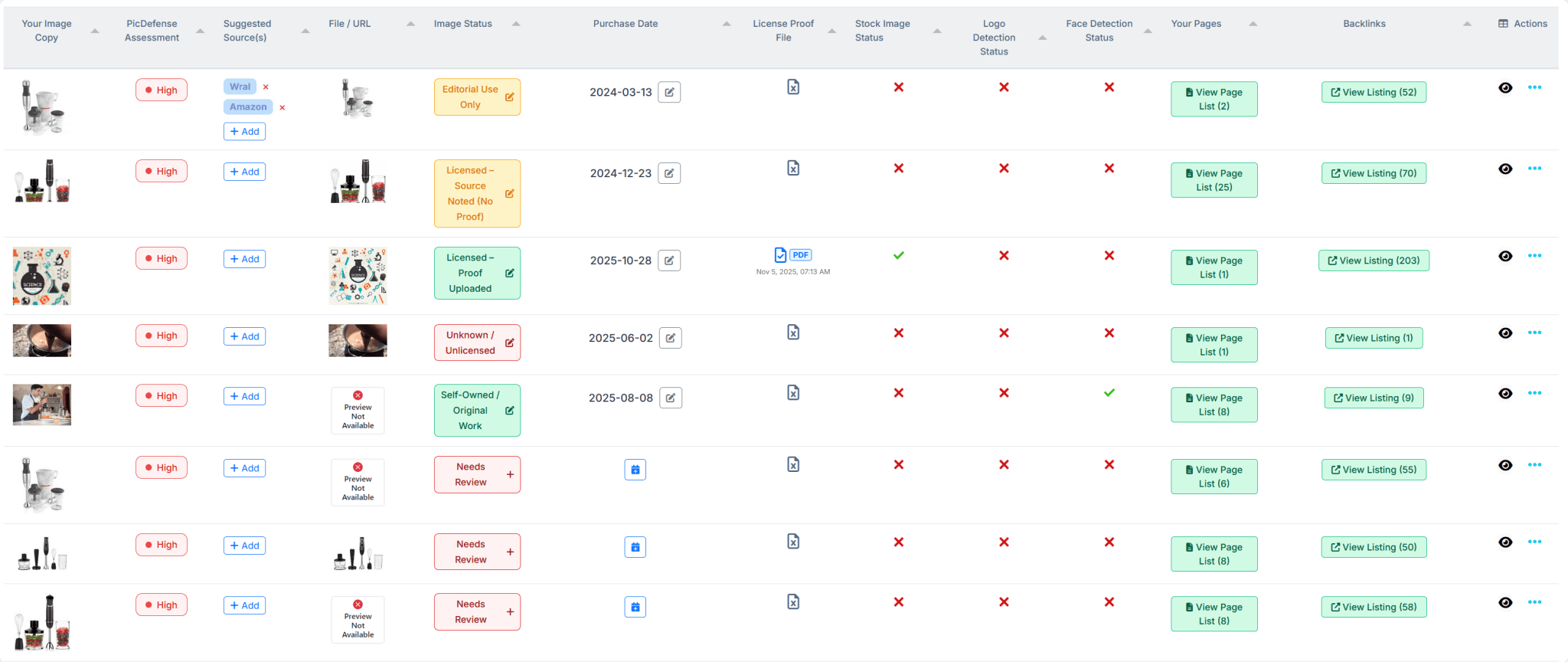
Defense Kit includes
Forensic Evidence Package
Who Contacted You?
We track the tactics of the most active enforcement entities.
PicRights
Tactic: Aggressive emails, frequent escalation to local law firms.
View Response GuideHigbee & Associates
Tactic: Actual copyright litigation. High settlement demands.
View Response GuideCopytrack
Tactic: "Retroactive Licensing" fees for past usage history.
View Response GuideGetty Images
Tactic: Highly structured corporate demand letters.
View Response GuideView Full Agency Directory
Complete directory with 50+ profiles
Common Questions
What you need to know before responding to a demand letter.
Is this letter a scam?
Likely not. While "copyright trolling" exists, agencies like PicRights and Copytrack are legitimate businesses authorized to collect fees. Calling it a "scam" and ignoring it is a dangerous legal strategy. Treat it as a verified business dispute.
Why should I pay $10 to scan my own image?
You aren't paying for the scan; you are paying for the Evidence. Our Defense Kit organizes visual proof, source intelligence, and metadata into a professional PDF that lawyers can use to respond to the demand letter. It turns a messy problem into a structured file.
Can't I just delete the image?
Removing the image stops future infringement, but agencies often have screenshots (or Wayback Machine logs) proving past usage. You still need to resolve the claim. Our Defense Kit helps you prove when it was removed and what the source was.
What if I have more than one image?
The Rapid Claim Audit ($10) includes 50 credits, allowing you to audit multiple URLs from the same demand letter (or check other risky images) without upgrading to a subscription.
Facts First. Panic Never.
Before you send a single email to the enforcement agency, know exactly where you stand.
Legal Disclaimer
PicDefense is a technology platform, not a law firm. We provide forensic data regarding image usage and licensing status. The information on this page is for educational purposes and does not constitute legal advice. If you are unsure of your legal standing, we strongly recommend consulting an Intellectual Property attorney.