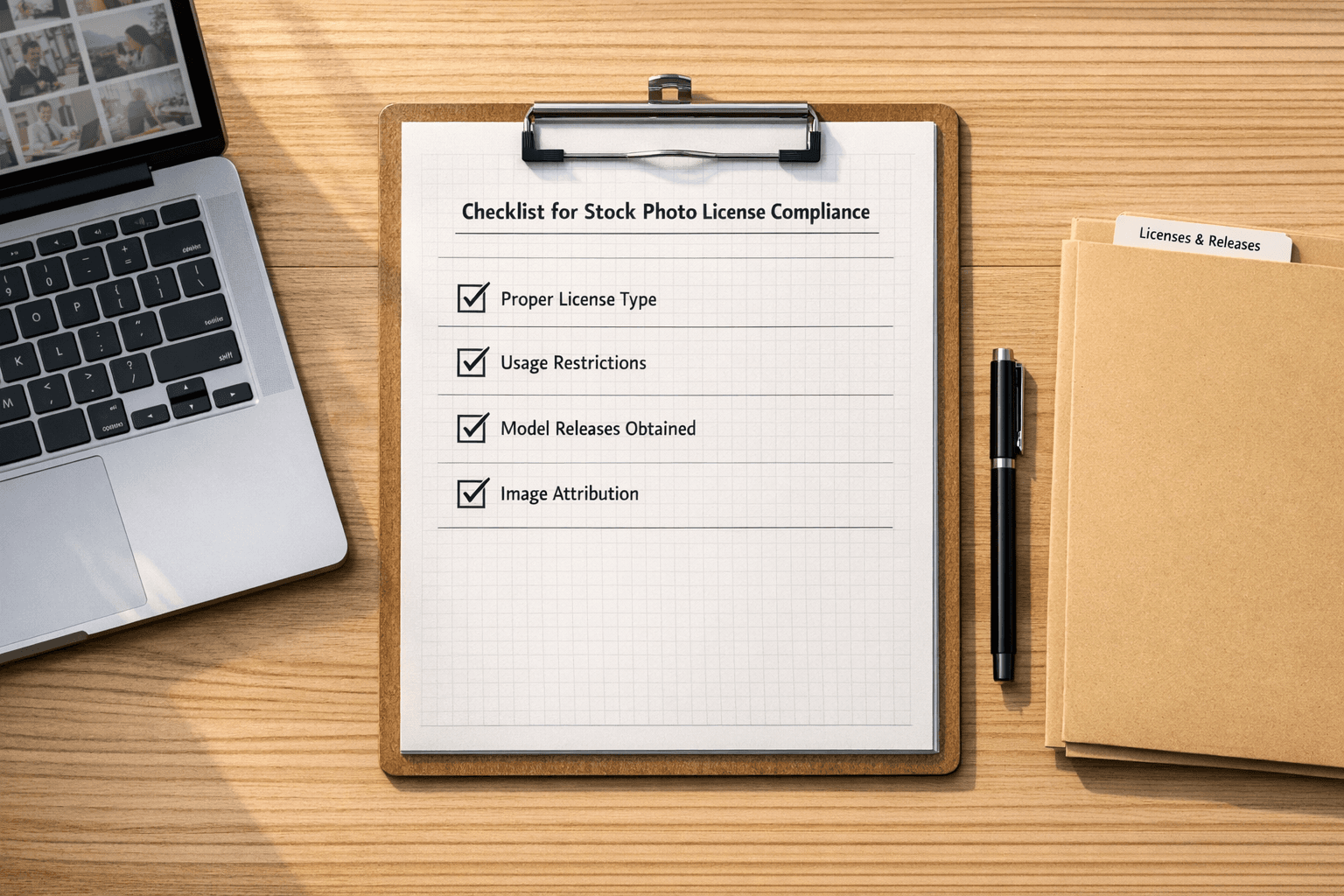
Metadata checking helps to make sure digital picture data, like EXIF data, follows the law and rules. This step keeps firms safe from costly copyright fights and protects their good name. But, doing it by hand is slow, often wrong, and can't do real-time checks. AI tools fix these issues by running audits on their own, watching all the time, and checking lots of pictures with great rightness.
Main Good Things of AI in Metadata Checking:
- Faster Work: AI can look at thousands of pictures in minutes, not the weeks it takes by hand.
- Always Watching: AI spots risks of not following the rules as they happen, stopping legal problems before they grow.
- Better Rightness: AI sees issues in metadata, even in changed or resized pictures, cutting down on human mistakes.
- Useful Tips: AI tools like PicDefense give full reports, point out risks, and offer fixes, easing the job of keeping to rules.
AI-driven tools like PicDefense make metadata checking easier for firms, big or small, by giving low-cost ways to watch pictures and report on compliance. This move from hand to automated checking not only saves time but also cuts down on legal dangers.
How AI Aids in Checking Metadata
AI is changing how firms check metadata compliance. By speeding up boring work and finding key details that old methods miss, AI makes managing image checks much better.
Quick Metadata Gather and Check
AI tools are great for pulling metadata from lots of images. They work on EXIF data, camera info, time stamps, and copyright details from many files in a short time - work that would take weeks by hand.
These tools do more than just pull data. AI systems check metadata against many databases and note any mismatches due to file type changes. They might catch high-quality images missing the right license data, making sure nothing is missed.
AI also deals with metadata mix-ups when images are made smaller, squeezed, or changed. Even if metadata is lost or changed in these steps, AI can study visual signs and left metadata to spot altered files.
Constant Compliance Check
Unlike old checks that are done from time to time, AI allows for non-stop watching of your whole image set. These systems run all the time, looking at new and old files against new copyright data and laws.
This anytime check means problems are found fast, not months later. For instance, if an image with unsure license is put up on your site, AI checks its metadata and look right away, comparing them to known copyrighted stuff. This fast feedback stops bigger issues.
AI also watches for metadata changes that might harm compliance. If licensing terms for stock pictures change or new copyright claims come up, the system spots these changes and tells you quick. This early watching helps you handle risks before they grow.
Spotting Problems and Cutting Risk
AI is good at seeing patterns that mean compliance risks. It might find many images with the same timestamps but different claimed origins or high-end photos missing right credit.
These systems also give risk scores to images based on their metadata details. Files missing maker info, unsure license claims, or metadata issues are marked for more check. This focuses your team on big risks first.
Beyond finding issues, AI gives clear steps to fix them. Instead of just pointing out problems, these systems give tips like using checked images, adding right credit, or getting the needed licenses. This turns checks into a clear and controlled task, letting you act with sureness.
How AI Changes Metadata Compliance Auditing
AI brings big changes to metadata compliance auditing that old ways just can't match. These gains go far past just saving time. They offer a more sure, fast, and ahead-of-time way to look after image compliance dangers.
Better Rightness and Less Mistakes
When people do metadata audits by hand, they often make mistakes, especially with lots of images. Small things are missed, changed files get by without notice, and tiny compliance problems stay hidden - this may lead to big legal issues later.
AI changes this game. Smart systems can check huge lists and look at many points of data - even in images that have been cut, made smaller, or changed in other ways. This sharp level of detail is not something that people can reach by themselves.
"PicDefense is highly accurate, leveraging a 73-billion-image database and advanced AI detection to flag potentially copyrighted images - even if they've been resized, cropped, or modified." [1]
AI gets this right by looking at data from the image, faces, key spots, brands, and where the stock photo comes from all at once. While a human checker might look only for clear signs of ownership, AI can see small hints that people checking by hand might miss. By setting images side-by-side with lots of images online, these systems find matches and troubles that could go unnoticed.
What's the result? Better details in records and not many missed errors - these are the risky times when bad images pass by unseen. More than just being right, AI has a speed that slow human checks can't reach.
Quicker Checks for Big Image Collections
AI not only does better - it makes the whole checking job much faster. This matters more as you have more pictures. Checking a big set by hand can take long weeks or months, putting your work at risk of not following rules in this time.
AI tools, though, can go through thousands of pictures in mere minutes. For instance, small checks (less than 100 pictures) can be done in about 15 minutes, and mid-sized checks (up to 1,000 pictures) take around 30 minutes [1]. This is unlike slow manual ways, where looking at 1,000 pictures might eat up many full work days.
This fast pace is key for businesses that change their pictures often. If you run an online store, put up new blog posts often, or start new marketing moves, AI lets you check your images quick and well.
AI also grows easy with your work. As you get more pictures, the system keeps up without needing more time or people, keeping rule-checking good and under control.
Fast, Beforehand Checks for Compliance Issues
Old ways of checking are slow - they spot problems only after they've made trouble. AI changes this by always watching and giving instant warnings, catching issues before they turn into big money fights.
"With our new Site Monitoring feature, we automatically detect newly added images, so your website stays compliant in real-time." [1]
Every week, scans catch new images right away, not just during set times. AI then gives each image a risk score to show possible problems using smart spotting tools. These scores let us know which images to look at first and which are less worrying.
This quick alert system keeps costly legal issues away. It spots possible copyright breaks before they lead to legal demands or court cases, letting firms keep away from big legal bills and settlement fees. For every image that raises a flag, the system suggests actions - whether to swap it, take it down, or get the right papers.
All these parts work together for a ahead-of-time way to follow rules, helping firms deal with risks before they turn into bigger troubles.
How PicDefense Makes Metadata Compliance Easy
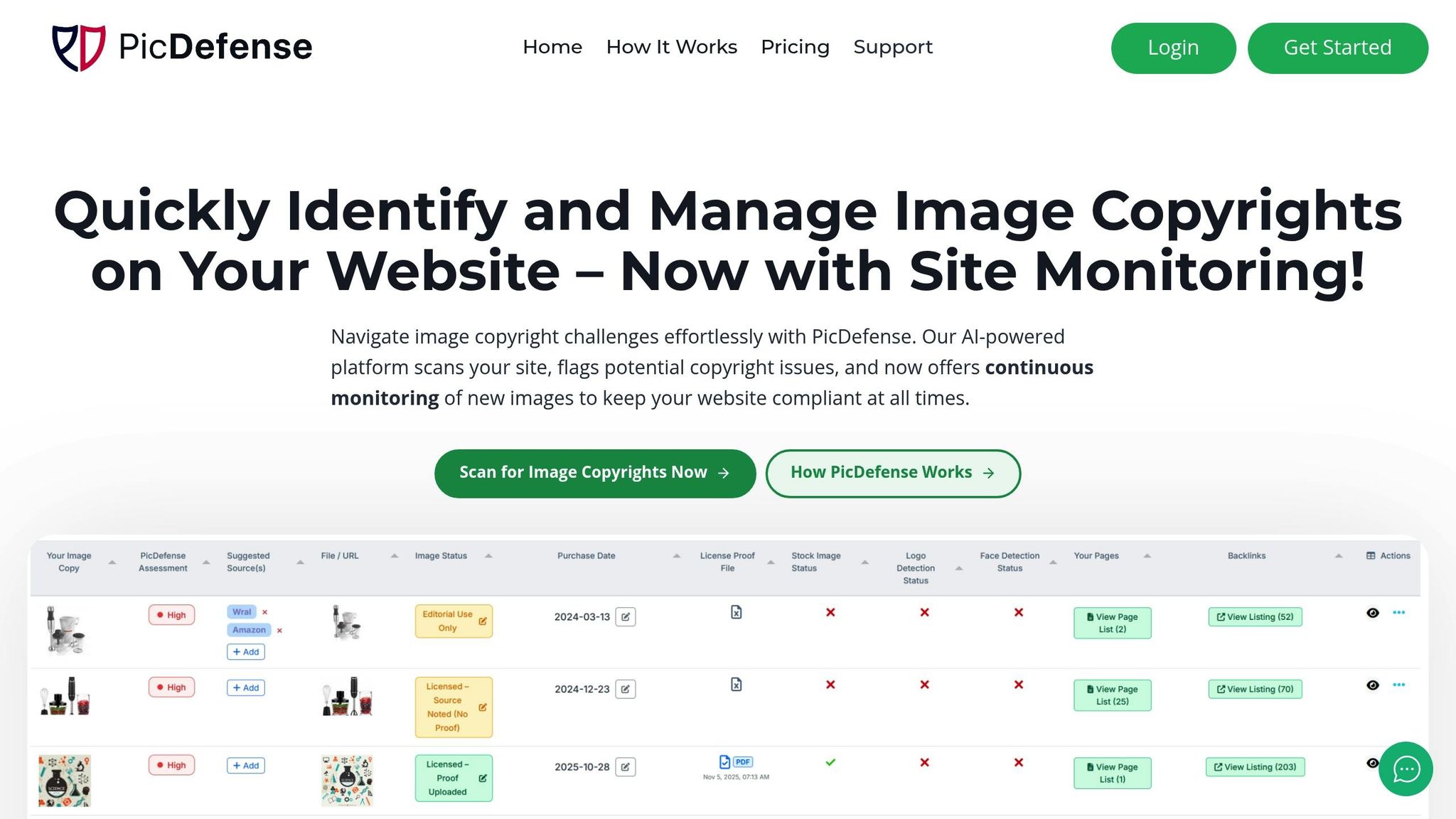
PicDefense uses AI to make checking metadata simple for website owners, helping them protect copyrights. The tool goes deep by looking at EXIF data, spotting faces, and finding logos or landmarks that may have trademark issues. By turning complex info into simple steps, PicDefense helps businesses deal with copyright risks without needing to know the law.
Key Tools of PicDefense
PicDefense is full of tools that make the check process easy, giving more than just basic scans. Its full-site scanning option automatically lists all images on a site, from top graphics to hidden pictures in blog posts. This makes sure no image is missed.
The tool’s advanced look into EXIF data, uses reverse image search, and checks backlinks to find possible copyright risks. For example, the backlink check helps find where a picture may have come from. While PicDefense suggests sources, users need to check and keep track of license details themselves.
When problems pop up, the risk fix tools step in, suggesting safe images from known sources to switch in for those flagged.
Made for Small to Mid-Sized Businesses
PicDefense's tools are great for small and mid-sized businesses (SMBs) that want pro websites but lack the legal help to manage copyright puzzles. The tool gives an easy, low-cost option made for SMB needs.
Here's a look at the pricing:
- Single scans: Start at $20 for 100 images, with a choice for 500 images at $85 - good for most small business sites.
- Site Monitoring: Costs $30 a month, covers 150 image checks. Unused credits carry over always, and up to three sites can be watched under one plan at no extra cost.
PicDefense also acts as a key spot for keeping compliance records. Users can safely store receipts, license files, and credit info, making a strong proof of image ownership if copyright issues pop up. Its auto-check feature looks over any new images added to a site, stopping the need for manual checks.
Detailed Reports for Legal Safety
PicDefense gives detailed compliance reports that act as practical tools and legal shields. These reports have PicRisk scores, which show the copyright risk of each image, helping businesses decide which images need quick focus.
Each report shows EXIF data study, reverse image search results, and backlink checks, giving a full view of an image’s digital past. These reports can be shared, making them key for legal advice, audits, or internal records.
Also, the reports help businesses keep a full list of licensed images. This record trail is key for fighting copyright claims, which can cost from $3,000 to $150,000 per image. By mixing these features, PicDefense cuts legal risks and makes sure businesses are ready to face copyright issues.
sbb-itb-59d21f2
Simple Ways to Follow Metadata Rules
Good shops understand how to stop small issues from getting big. Getting into the habit of managing metadata keeps your picture files in check. These steps go well with the AI tools and risk checks talked about before.
Check and Update Metadata Often
It's key to look over your metadata often to catch little issues before they grow. Plan these reviews when you update your site or start new campaigns to find missing metadata or unclear licenses early. When you see a problem, fix it fast to avoid bigger risks and keep things smooth.
Keep Clear Records
Having detailed notes can save you in copyright fights. Be sure to write down each image's source, when you got it, license deals, and any changes you made. Add times and reasons for any edits to keep a clear story.
Keep these records safe and easy to get to. This helps keep your whole picture library consistent and makes following rules simpler.
Watch Important Rule-Following Points
Even though automated tools help a lot, watching certain points lets you understand your metadata health better. Keeping an eye on these points helps you see trends and fix issues before they get worse. Here are some main areas to watch:
- Risk Levels: Watch PicRisk scores and how many pictures get flagged to see your risk.
- Approved Picture Count: Keep track of how many pictures have all the right documents to see if you're following rules well.
- Flow of New Pictures: For sites that often add new pictures, watch how many new pictures come into your rule-following steps.
- Technical Points: Check how complete metadata is by looking at EXIF data and how well keywords are used, making sure your files are neat and easy to find.
- Detection Rates: See how often things like faces, landmarks, logos, or stock photo details are spotted. This can show where you might be missing legal or license needs.
Think about using a dashboard that puts these points together for easy checks. This gives you a clear, live look at your rule-following status, helping you fix any off-track points quickly and keep high standards in your picture library.
Closing Thoughts: The Next Step for Metadata Checks with AI
AI-driven metadata checks are changing how businesses handle rules. Before, people had to check things now and then and fix issues as they came up. Now, it's all about watching all the time, without stopping. This way, not only do businesses face less legal trouble, but the new system also fits right into how things are done every day, turning rule-following into an automatic task.
The proof is in the results. Take PicDefense's AI, for example. It uses a big library of images and is very good at finding problems. It looks at faces, places, brands, and EXIF data, showing us how smart AI has become at spotting sneaky risks hidden in metadata [1].
But we're only at the start. AI is set to grow even more, far past just spotting problems. Soon, these systems will learn on their own and get better over time, making checks even smoother [2]. Instead of just dealing with issues as they happen, these tools will look ahead to stop problems before they turn into big troubles. This change makes sure that keeping up with rules can match the fast pace of today's digital world.
Also, AI is starting to play a big part in more extensive rule-following tasks. Platforms now offer 3,000+ ready-to-go links to tools like OpenAI and Perplexity AI, helping to keep checks in line across all digital parts [2]. This kind of link turns rule-following from a single job into a normal part of day-to-day work.
Tools like PicDefense show that high-level rule-following skills are now easier to get. Companies can now check whole websites, look deep into metadata, and make detailed reports - all with easy-to-use setups and automatic ways of working. This gets rid of the old methods that took a lot of time and effort, replacing them with quick, mistake-cutting automation.
What lies ahead for metadata rule checks is less risk and more room for growth. With AI always watching and protecting digital stuff, companies can focus less on unseen risks and more on making new things and growing. These steps forward make sure following rules is no longer hard but a smooth part of things you do every day.
FAQs
How does AI help make checks on metadata correct and fast?
AI changes the way we check if metadata follows rules by making tasks that used to be hard and full of mistakes easy. It no longer uses slow, by-hand checks; instead, AI tools quickly go through large amounts of data, spot what does not match, and point out possible rule issues as they come up.
By using smart ways to see patterns and odd things in metadata, these tools make sure checks are full and always the same. AI makes steps like pulling out, looking at, and noting down metadata easy. It saves time and cuts work, letting companies focus on fixing big problems and following rules with ease.
How does PicDefense make it easy for small and mid-sized firms to keep track of metadata rules?
PicDefense gives a set of tools run by AI to help small and mid-sized firms with metadata rules. They offer full-site scans to list all images, deep image checks to find copyright issues, and reverse image search tools to watch where images pop up online.
More cool tools are source tracing via backlinks, which find where images come from, and risk-cutting tools that offer other images for ones that look like trouble. To make things run smooth, PicDefense has a WordPress plugin, API access, and works with sites like Zapier and Make.com to help manage things well.
Protect your website from image copyright claims
PicDefense scans your entire website, identifies image risks, and stores proof of compliance — so you never get caught off guard.