Metadata tampering in images is a growing issue that can lead to copyright violations, fraud, and loss of trust. AI tools, like PicDefense, are now used to detect these changes, ensuring images remain reliable and compliant. Here's how AI tackles this challenge:
- Detecting Changes in EXIF Data: AI analyzes metadata like timestamps, camera details, and ownership info to find inconsistencies.
- Cross-Referencing Databases: With access to billions of verified images, AI compares metadata to validate authenticity.
- Visual Content Analysis: Deep learning inspects image pixels for signs of manipulation, such as noise patterns or compression artifacts.
- Preventative Measures: Techniques like cryptographic watermarking embed tamper-proof data directly into image files.
These methods save time, reduce costs, and minimize legal risks by automating compliance checks. Tools like PicDefense also offer reverse image searches, licensing validation, and centralized compliance management to simplify workflows for businesses.
Types of Metadata Tampering and Warning Signs
Grasping how metadata can be manipulated is key to verifying an image's authenticity and ensuring proper copyright acknowledgment. Some methods of tampering focus on altering EXIF data, which can obscure the image's history and rightful ownership.
Types of Metadata Tampering
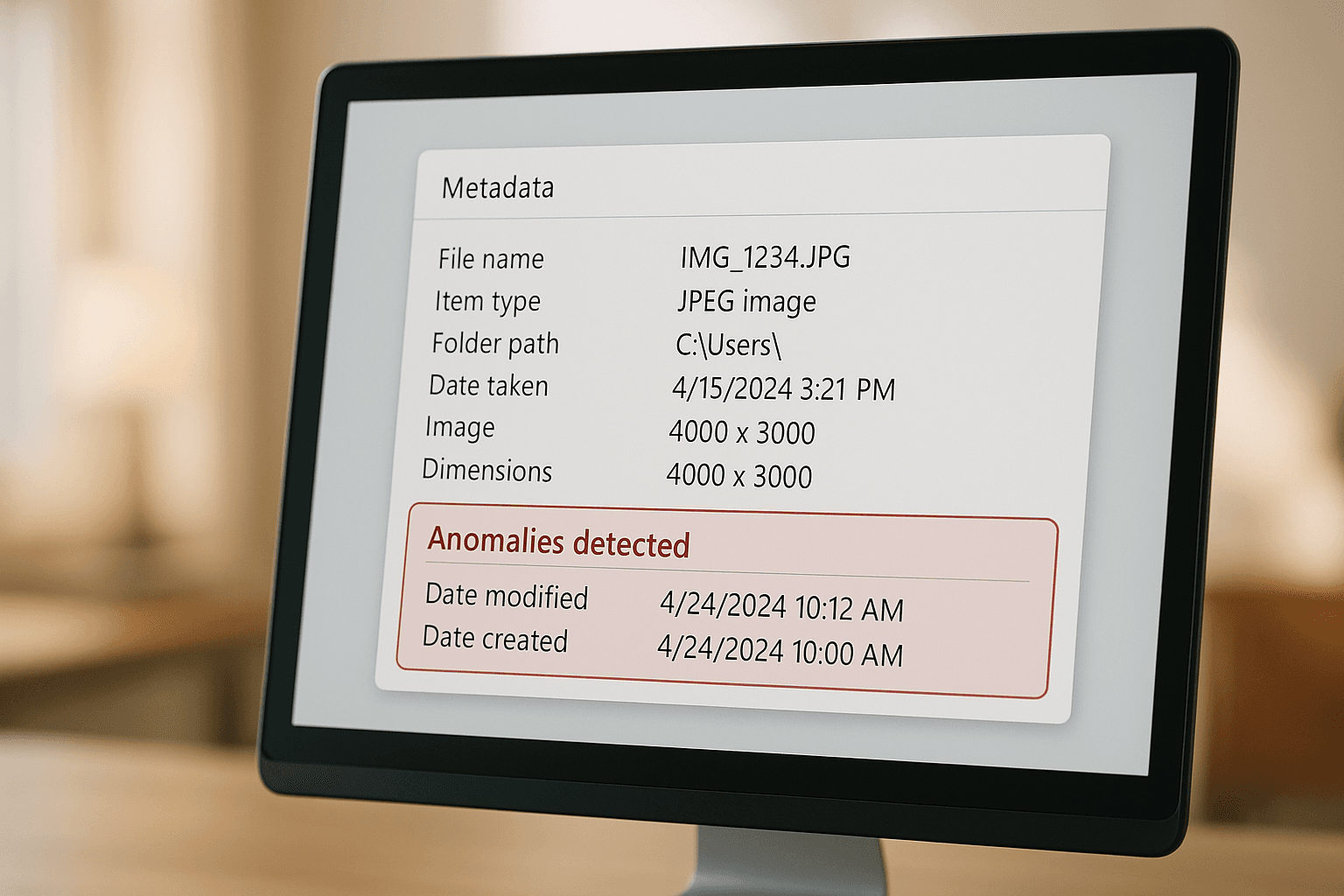
Timestamp Alteration: This involves changing the recorded creation or modification dates of an image. Such changes can disrupt the timeline, making it difficult to determine the image's actual chronology.
Metadata Stripping: This is the removal of all EXIF data. While some may do this to protect privacy, it also erases critical details like camera specifications and copyright information, which are essential for verifying authenticity.
Warning Signs of Tampering
Here are some red flags that could signal metadata manipulation:
- Missing Camera Details: Authentic images typically include detailed information about the camera used. If this data is absent, it might indicate that someone has stripped or altered the metadata.
- Inconsistent Timestamps: If the creation and modification dates don’t align or appear to be out of sequence, it’s a strong indicator that the metadata has been tampered with.
- Incomplete Ownership Information: Reliable images usually include clear copyright details. If this information is missing or incomplete, it could point to tampering.
Advanced AI tools, like those developed by PicDefense, are designed to spot these subtle inconsistencies. By analyzing multiple aspects of EXIF data for irregularities, these systems play a critical role in verifying the authenticity of images and preserving their integrity. AI-driven solutions are becoming essential in safeguarding metadata and ensuring its reliability.
AI Methods for Detecting Metadata Tampering
Artificial intelligence has transformed the way we identify tampering in image metadata. By employing advanced algorithms, modern systems can uncover even the most subtle manipulations.
Machine Learning and EXIF Analysis
Machine learning plays a key role in analyzing EXIF data, which includes details like capture dates, camera specifications, timestamps, and an image's history. These algorithms work by cross-referencing EXIF information to spot inconsistencies. For instance, if an image claims to be taken with a specific camera model, but its technical details don’t align with that model's capabilities, the system flags the issue. To refine these checks, AI compares images against massive databases of verified examples. Platforms such as PicDefense utilize these techniques, scanning metadata and comparing images against a collection of over 73 billion indexed files to identify potential copyright risks and discrepancies [1].
Deep Learning and Pixel-Level Analysis
Deep learning enhances metadata verification by connecting the dots between EXIF data and the image's visual content. This dual-layer approach evaluates both the claims made in the metadata and the story told by the pixels. By analyzing artifacts, noise patterns, and compression signatures in the image, AI can detect inconsistencies that suggest tampering. Even sophisticated attempts to manipulate metadata often leave behind visual traces that this method can uncover. This makes deep learning especially effective in identifying hidden modifications, paving the way for more reliable image authentication.
New Standards for Image Provenance
Taking things further, new methods aim to secure image authenticity right from the moment of creation. Cryptographic watermarking and invisible AI signatures are emerging as strong tools to safeguard metadata integrity. These techniques embed authentication data directly into the image file, making it nearly impossible to alter without leaving detectable traces. AI systems are now being developed to verify these cryptographic signatures, ensuring they haven’t been tampered with or removed. Additionally, some systems enhance copyright risk assessments by tracking backlinks, monitoring where images appear online, and tracing potential stock sources. These advancements are setting a higher bar for image authentication, making metadata tampering increasingly difficult to achieve undetected.
How PicDefense Protects Metadata Integrity

PicDefense combines AI technology with centralized compliance tools to safeguard metadata integrity and streamline image licensing. Here's a closer look at how PicDefense ensures businesses stay ahead of potential copyright issues.
Automated Metadata Analysis
PicDefense scans your entire website, cataloging images and extracting EXIF metadata to detect inconsistencies. It examines details like camera specifications, timestamps, GPS coordinates, and editing software signatures to uncover signs of tampering.
For example, if there's a mismatch between the listed camera model and the technical metadata, the system flags it. It also uses advanced detection features to identify faces, logos, and landmarks, helping assess copyright risks by spotting potentially protected content.
The platform goes beyond basic metadata checks with automated compliance workflows tailored to your needs. These workflows can whitelist images from trusted sources, flag those missing documentation, or send alerts for high-risk content. By automating these processes, PicDefense reduces compliance audit times from days to just hours.
Reverse Image Search and Source Validation
PicDefense integrates reverse image search tools from TinEye and Google Vision to trace image origins and validate metadata claims. This feature analyzes backlinks to confirm whether an image matches stock photo databases or other legitimate sources.
If an image appears across multiple sites, PicDefense logs its source to verify licensing. This becomes especially helpful in defending against copyright claims, as it provides evidence of an image’s legitimate availability. The system also stores these findings alongside your licensing documentation for easy access when needed.
Additionally, reverse image search helps identify risks by uncovering unauthorized usage patterns or highlighting images that may require further licensing checks. This proactive approach allows businesses to address potential issues before they escalate into costly legal disputes.
Compliance Features and User Tools
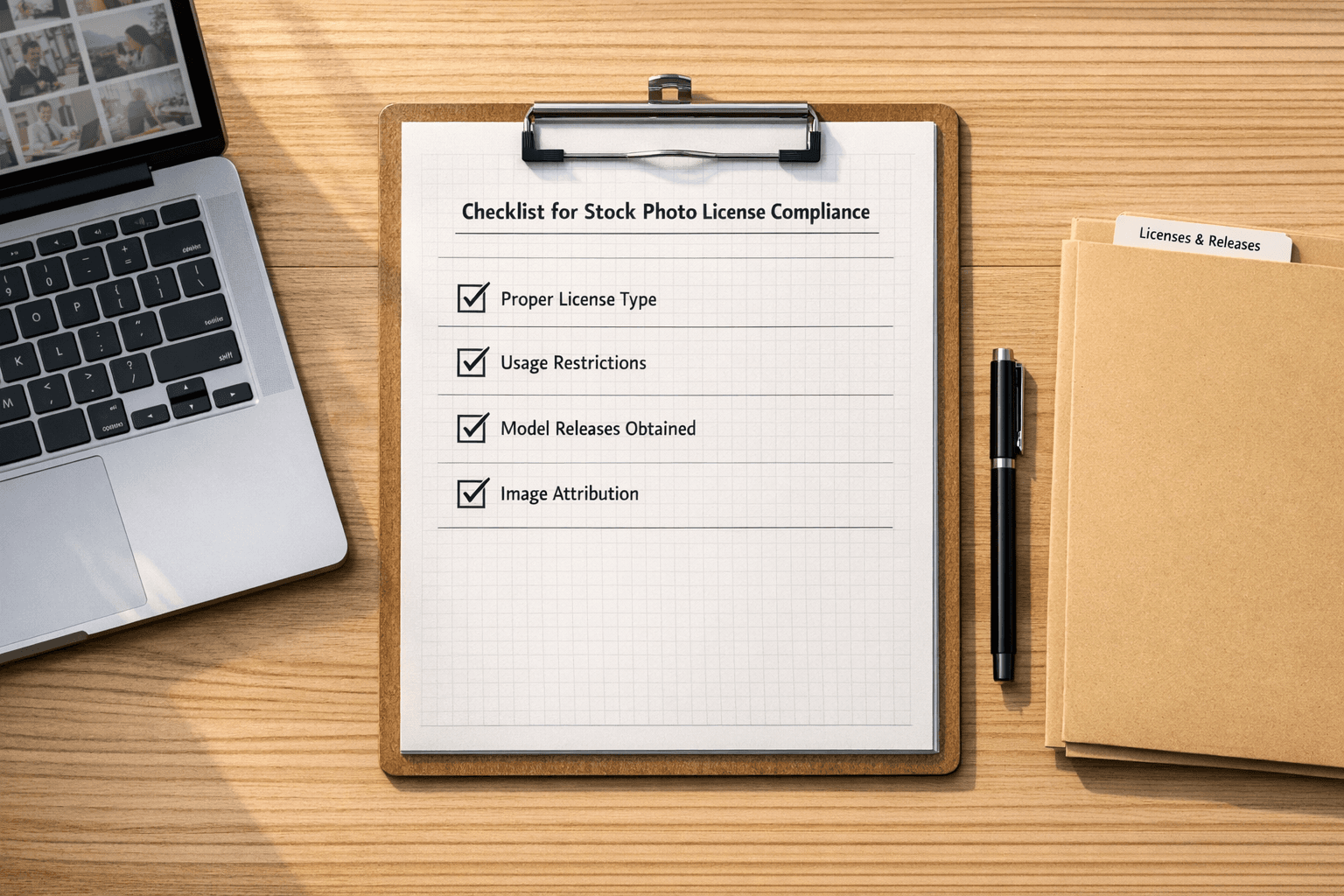
Once an image’s authenticity is verified, PicDefense consolidates licensing documentation to simplify legal defenses. The platform centralizes compliance management, enabling businesses to organize, track, and prove image ownership with ease. Users can upload and store purchase receipts, licensing agreements, and attribution details for every image in their inventory - an invaluable resource when responding to copyright inquiries, especially for older purchases.
PicDefense also tracks purchase dates, strengthening licensing records against historical claims.
Integration options make the platform adaptable to various workflows. A WordPress plugin allows seamless monitoring of new image uploads, automatically checking them against compliance requirements. For custom workflows, API access through Zapier and Make.com enables automated compliance checks to fit within broader digital ecosystems.
The platform’s risk scoring system, known as PicRisk ratings, prioritizes images needing immediate attention. High-risk images receive detailed analysis and recommendations, often suggesting copyright-free alternatives from platforms like Pexels. This system ensures businesses focus their efforts where it matters most, avoiding unnecessary time spent on properly licensed, low-risk images.
PicDefense also supports team collaboration, allowing multiple users to manage compliance records. This ensures licensing information remains accessible, even during staff transitions. Exportable compliance reports provide audit-ready documentation, giving legal teams or stakeholders the tools they need to demonstrate good-faith compliance efforts in case of disputes.
sbb-itb-59d21f2
Benefits of Automated Metadata Verification
Automated metadata verification takes image compliance to the next level by simplifying processes, saving time, and cutting costs. Building on advanced detection methods, it ensures accuracy and efficiency like never before.
Speed, Accuracy, and Scalability
Manually verifying metadata can be a slow grind, especially when dealing with large image libraries. AI-powered tools like PicDefense can slash audit times from days to just a few hours. This speed not only helps identify risks faster but also makes compliance management much smoother.
Accuracy is another game-changer. Human reviewers might miss subtle inconsistencies in metadata, like discrepancies in EXIF data or signs of tampering. AI tools, on the other hand, analyze multiple data points - camera details, timestamps, GPS coordinates, and editing software signatures - all at once. This ensures even the smallest red flags don’t go unnoticed.
Scalability is where automation shines brightest. While manual methods are limited by the number of people available, automated systems can process massive image collections in record time. For agencies managing multiple websites or vast libraries, this means they can grow their operations without needing to hire more staff.
Best Practices for Metadata Management
To get the most out of automated tools, it’s crucial to maintain a solid metadata strategy. Start by setting up a regular scanning schedule. For many businesses, monthly scans are enough, but platforms with heavy traffic or lots of content might need more frequent checks.
Centralized documentation is another must-have. Keeping purchase receipts, licensing agreements, and attribution details stored alongside each image makes it easier to handle disputes or inquiries. This is especially useful when original documents are scattered across different systems.
Tracking purchase dates is also vital. If someone questions the validity of an image’s license, having accurate purchase records can quickly clear up any confusion.
Smart workflow automation can make life even easier. For instance, automated rules can whitelist trusted sources, flag images missing key documentation, or alert teams about high-risk files. This reduces the need for constant manual oversight.
Lastly, collaboration tools can ensure seamless compliance management. Allowing multiple team members access to licensing and compliance records ensures everything stays on track, even if someone leaves the team.
Manual vs. Automated Verification Comparison
Here’s a breakdown of how manual and automated verification stack up:
| Aspect | Manual Verification | Automated Verification |
|---|---|---|
| Processing Speed | Limited by human capacity | Handles vast image collections quickly |
| Time Investment | Can take days for full audits | Scans completed in hours |
| Accuracy | Relies on reviewer expertise | Consistent AI-driven analysis |
| Cost per Image | High labor costs | Affordable, ranging from US$0.07 to US$0.20 per image |
| Scalability | Constrained by manual effort | Easily scales for large libraries |
| Consistency | Varies between reviewers | Delivers uniform results every time |
| Documentation | Requires manual tracking | Automatically generates compliance-ready reports |
| Risk Detection | Basic visual checks | Advanced AI uncovers subtle issues |
| Ongoing Monitoring | Needs constant human input | Continuous, automated monitoring |
| Legal Defense Preparedness | Records may be fragmented | Centralized, audit-ready documentation |
This comparison highlights why businesses are increasingly opting for automated solutions like PicDefense. While manual methods might feel thorough, they’re prone to errors, inconsistencies, and higher costs. Automated systems not only simplify compliance but also provide 24/7 protection, identifying risks and keeping records up to date without constant human involvement.
Conclusion
Identifying metadata tampering has become a vital safeguard against copyright violations and concerns over image authenticity in today’s digital world. As businesses increasingly depend on visual content, ensuring the integrity of image origins and spotting manipulations can help avoid expensive legal disputes.
The risks are real. As PicDefense.io highlights:
"If you use images on your website, you could be at risk of copyright infringement - without even realizing it. Many businesses, bloggers, and website owners receive copyright demand letters for images they thought were safe to use. Even if you didn't knowingly infringe, you can still be held liable." [1]
This underscores why metadata analysis is no longer optional - it’s a necessary step to protect your digital assets.
AI-powered tools like PicDefense have revolutionized this process, replacing time-consuming manual audits with automated systems. By analyzing databases and examining EXIF data, these tools can detect tampering that might go unnoticed by human reviewers. They also provide detailed insights into an image’s copyright history and status.
The financial benefits are hard to ignore. Using AI significantly reduces manual errors and lowers verification costs. Instead of facing potential damages ranging from $3,000 to $150,000, businesses can verify images for as little as $0.07 to $0.20 each. More importantly, this proactive approach offers peace of mind, ensuring compliance before issues arise.
Beyond avoiding legal troubles, businesses that adopt thorough metadata verification can create audit-ready records, simplify workflows, and protect their brand reputation from copyright missteps. In an era where even "royalty-free" images come with strict licensing terms, having robust tools and processes isn’t just helpful - it’s essential.
With AI-driven metadata detection becoming more advanced and accessible, now is the time to secure your digital assets and ensure compliance. Waiting until issues arise is a risk no business can afford to take.
FAQs
How does AI detect and differentiate metadata tampering in images?
AI can spot metadata tampering in images by examining patterns and inconsistencies in the embedded data, like EXIF information. It checks this data against established standards and typical editing practices to identify anything unusual. For instance, an AI tool might flag discrepancies in timestamps, GPS coordinates, or camera settings that don't match the image's context.
Using sophisticated algorithms, AI can tell the difference between acceptable edits - such as resizing or format changes - and suspicious alterations that could suggest tampering. This helps ensure image authenticity and supports users in adhering to copyright and usage guidelines.
How does AI use deep learning to detect tampering in image metadata?
AI uses deep learning algorithms to spot irregularities in image metadata that could signal tampering. By examining patterns and inconsistencies in EXIF data - like timestamps, geolocation, or camera settings - AI can identify potential alterations that stray from typical norms.
These tools dive deeper than basic checks. Machine learning models, trained on extensive datasets, can uncover subtle differences, helping verify the legitimacy of images. This approach plays a crucial role in protecting images from unauthorized edits or manipulation.
How can businesses use AI tools like PicDefense to verify image authenticity and ensure compliance?
Businesses can integrate AI tools like PicDefense into their operations to verify image authenticity with ease. PicDefense offers a web-based scanner that reviews all publicly visible images on a website, requiring no installation. This tool simplifies the process of ensuring images meet authenticity and copyright standards.
For continuous oversight, the Site Monitoring feature helps track changes and maintain compliance over time. PicDefense also provides a WordPress plugin, enabling seamless image management directly within websites. To further automate workflows, integrations with platforms like Zapier and Make.com allow businesses to embed PicDefense into their existing digital systems, simplifying compliance tasks efficiently.
Protect your website from image copyright claims
PicDefense scans your entire website, identifies image risks, and stores proof of compliance — so you never get caught off guard.