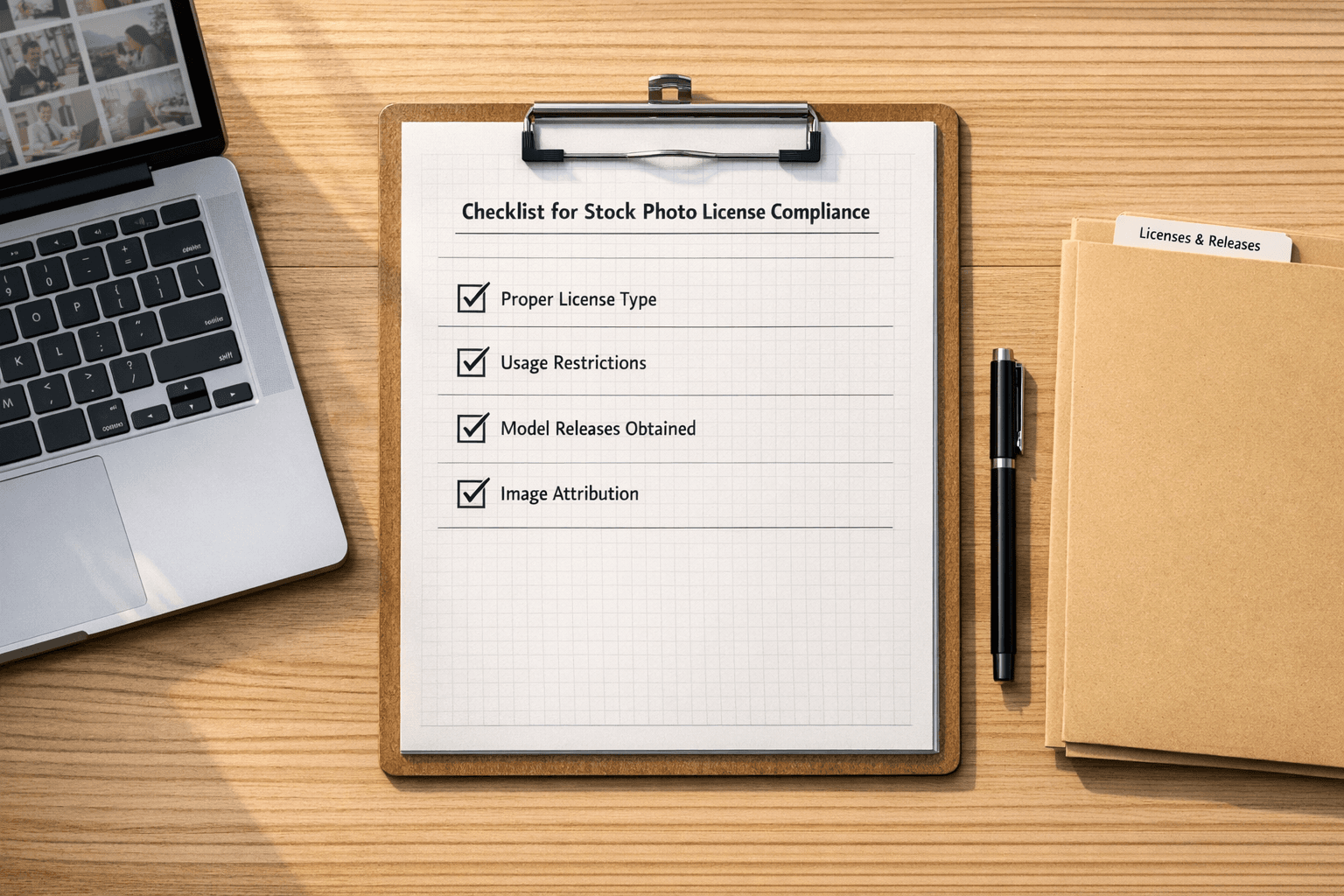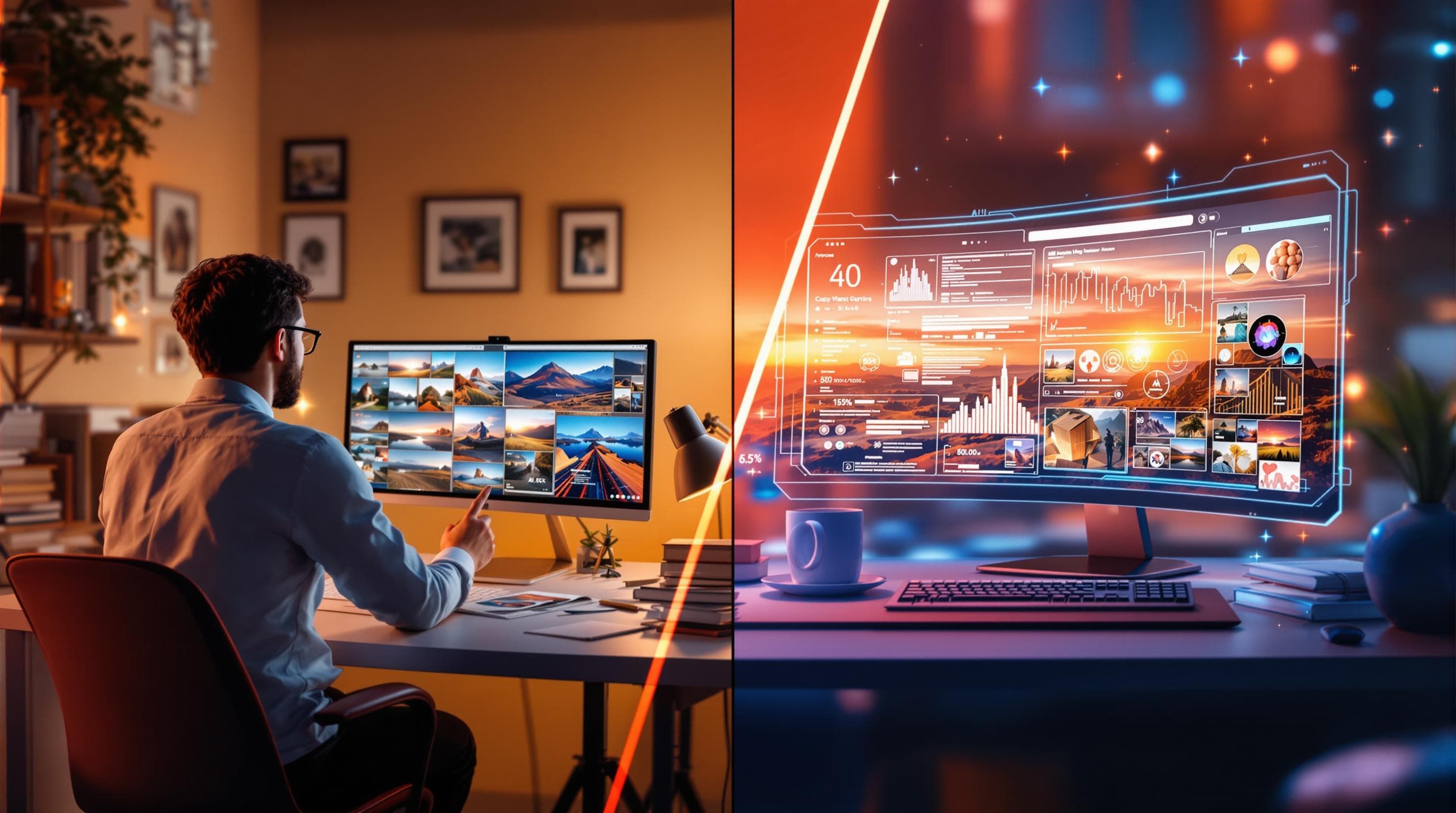
Struggling to navigate image copyright complexities? Whether you're managing a personal blog or a growing business, protecting your digital assets is crucial. Here's the good news: you don’t have to choose between efficiency and precision. By leveraging tools like PicDefense.io, you can integrate scalable AI-powered solutions with human expertise for comprehensive copyright protection.
- AI Scanning: Ideal for large-scale monitoring, offering fast, cost-effective, and consistent results.
- Manual Scanning: Essential for complex cases where context and human judgment make all the difference.
In this guide, we'll explore the strengths and weaknesses of each method, helping you decide the best approach for your needs.
Quick Comparison
| Factor | Manual Scanning | AI Scanning |
|---|---|---|
| Speed | 100-200 images/day per reviewer | Millions of images/day |
| Cost | $25-50/hour per reviewer | $0.07-0.20 per image |
| Context Handling | Strong for nuanced cases | Limited to predefined rules |
| False Positives | Low (<5%) | Higher (15-20%) |
Recommendation: Use AI for bulk tasks and manual reviews for complex cases. For small businesses, AI tools are cost-effective. Larger enterprises benefit from a hybrid approach combining AI efficiency with human oversight.
Let’s dive into the details.
Manual Image Copyright Scanning Explained
What is Manual Scanning?
Manual image copyright scanning involves experts carefully reviewing visual content to identify potential copyright violations. These professionals analyze factors like visual similarities, source attribution, and the context in which the image is used. Their approach is grounded in a thorough understanding of copyright law, including considerations like fair use.
Benefits of Manual Scanning
Manual image scanning offers unmatched precision for complex scenarios. Trained professionals can evaluate nuanced factors such as:
- Transformative Uses: Identifying parodies, educational content, or artistic modifications.
- Contextual Relevance: Assessing whether an image's usage aligns with fair use or specific licensing terms.
- Compliance Challenges: Navigating intricate licensing agreements and unique media formats.
For high-stakes cases, manual reviews ensure informed decisions grounded in copyright expertise, complementing scalable AI-driven tools like PicDefense.io.
For organizations dealing with high-stakes copyright issues, manual scanning offers a level of precision that automated systems often can’t match. Human judgment is particularly valuable when subtle variations or unique contexts come into play.
Drawbacks of Manual Scanning
Despite its strengths, manual scanning has some clear downsides. It’s time-consuming, expensive, and inconsistent, making it less practical for large-scale monitoring efforts.
| Limitation | Impact |
|---|---|
| Processing Speed | Limited capacity - reviewers can only analyze a small number of images daily |
| Cost | Skilled professionals are expensive, increasing operational costs |
| Scalability | Struggles to handle large or rapidly growing volumes of content |
| Consistency | Different reviewers may interpret similar cases differently |
For industries like publishing and media, where copyright concerns are critical, these challenges often mean manual scanning is best used alongside other methods. While it’s ideal for resolving complex cases, it’s not efficient enough to serve as the sole solution for digital copyright protection.
The limitations of manual scanning underscore the importance of integrating scalable options, such as AI-based tools, which will be discussed in the next section.
AI Image Copyright Scanning Explained
What is AI Scanning?
AI-powered copyright scanning revolutionizes image compliance by handling large-scale monitoring with ease. Platforms like PicDefense.io utilize advanced proprietary algorithms to analyze images through:
- Metadata Analysis: Extracts key details to trace origins and copyright status.
- Reverse Image Search: Tracks visual matches across the web to flag potential violations.
- Backlink Tracking: Monitors where images are used online, ensuring proper licensing.
PicDefense.io’s AI tools quickly spot edits or unauthorized usage, offering actionable insights that help businesses proactively manage risks.
Benefits of AI Scanning
AI-driven copyright scanning addresses many challenges of manual review with a range of advantages:
| Benefit | Description |
|---|---|
| Scalability | Processes thousands of images at once, making it ideal for large platforms. |
| Real-time Monitoring | Sends instant alerts when potential violations are detected. |
| Integration | Works seamlessly with tools like WordPress plugins and APIs for smoother workflows. |
| Consistency | Ensures uniform analysis across scans, eliminating human bias. |
| Cost Savings | Cuts down on long-term costs compared to maintaining a manual review team. |
For example, PicDefense.io automates the process by crawling entire websites, creating detailed image inventories, and analyzing each one for risks. It can identify faces, logos, and landmarks while tracking image usage online through backlink analysis.
Drawbacks of AI Scanning
Despite its speed and efficiency, AI scanning has limitations that often require human oversight for complex cases. According to b12.io:
"AI copyright infringement detection software utilizes advanced algorithms to scan and analyze vast amounts of digital content" [2]
Key challenges include:
- Difficulty detecting heavily altered images, such as those with extreme cropping or heavy filters.
- Struggles with identifying AI-generated content, especially since the U.S. Copyright Office does not allow registration of AI-created works without "human authorship" [1].
- Risk of false positives and an inability to fully interpret fair use or artistic transformations without human judgment.
AI scanning serves as a powerful tool for large-scale copyright protection. However, pairing it with human expertise ensures a more thorough and nuanced approach to handling copyright concerns.
Can artists protect their work from AI?
sbb-itb-59d21f2
Manual vs AI Image Copyright Scanning: A Comparison
Advances in AI have transformed how we handle image copyright protection, but manual scanning still holds its ground in certain scenarios. Comparing these two methods helps businesses decide the best approach to protect their digital assets.
Comparison Table
| Factor | Manual Scanning | AI Scanning |
|---|---|---|
| Processing Efficiency | 100-200 images per day per reviewer | Millions of images daily |
| Cost | $25-50 per hour for professional review | $0.15-0.30 per image for automated scanning |
| Contextual Understanding | Strong ability to interpret nuanced usage rights | Limited to predefined rules |
| Error Detection | Low false positive rate (under 5%) | May produce 15-20% false positives |
AI tools are great for automating large-scale copyright protection, especially for platforms managing thousands or even millions of images daily. But the key is knowing when to rely on each method.
Here’s how each approach stands out:
- High-Volume Scenarios: AI scanning is a must for businesses dealing with massive image libraries. It offers consistent quality and can process images at an unmatched speed.
-
Complex Copyright Cases: Manual scanning shines in situations that demand human insight, such as:
- Evaluating fair use
- Analyzing artistic transformations
- Reviewing intricate licensing agreements
- Assessing mixed media works
In short, manual scanning is better for nuanced cases, while AI handles large-scale tasks efficiently. Using both methods together can provide a more complete copyright protection strategy [1].
The next section dives deeper into how businesses can tailor these approaches to their specific needs.
Choosing the Best Approach for Your Needs
Deciding between manual and AI-driven scanning depends on factors like your organization's size, available resources, and risk tolerance. Below, we've outlined suggestions tailored to different business needs.
Recommendations for Small Businesses
Small businesses often operate with limited resources but still need reliable copyright protection. AI-based tools, such as PicDefense.io, offer affordable solutions starting at $75 for 500 images.
Here’s why AI solutions work well for small businesses:
- Automated metadata analysis to flag potential issues
- Risk scoring to prioritize concerns
- Alternative image suggestions from legally compliant sources
- Flexible, pay-as-you-go pricing models
AI can handle the bulk of routine tasks, while manual reviews can be reserved for high-value or sensitive content.
Recommendations for Large Enterprises
For large enterprises managing extensive image libraries and more complex licensing needs, a hybrid approach is ideal. Combining AI automation with human oversight ensures both efficiency and accuracy.
How to implement this approach:
- Use AI for the initial screening of large volumes of images.
- Assign manual reviews to high-risk content, major marketing campaigns, or intricate licensing cases.
- Integrate automated scanning and monitoring tools into your content management systems via APIs.
Comparing Key Factors
When determining the right approach, consider these critical factors:
| Factor | Small Business | Large Enterprise |
|---|---|---|
| Efficiency | AI-driven automation | Hybrid approach |
| Risk Management | Standard protection | Enhanced verification |
| Implementation | Standalone solution | Integrated systems |
Industries that face higher legal risks should prioritize accuracy, while businesses managing large volumes of content should focus on scalability. Tools like ScoreDetect, which use fingerprinting technology to spot even subtle image alterations, can offer an extra layer of protection against more advanced infringement attempts [3].
Start with AI for bulk scanning, and add manual reviews as the complexity of your needs grows. By combining the right tools and expertise, you can achieve thorough copyright protection while making the best use of your resources.
Conclusion
In today’s fast-evolving digital landscape, protecting your visual content has never been more critical. Choosing between manual and AI-driven scanning is not an either-or decision; it’s about finding the right balance. Tools like PicDefense.io enable businesses of all sizes to combine scalable AI efficiency with human insight, ensuring robust copyright compliance without overspending resources.
Whether you’re safeguarding a small blog or managing enterprise-level assets, the right approach empowers you to stay ahead of risks and focus on growth.
Key Points
Efficiency and Accuracy
Manual scanning works well for complex, detailed cases but requires a lot of time and effort. On the other hand, AI can handle large-scale tasks quickly and efficiently. This makes AI especially useful for businesses managing growing image collections [2].
Balancing Resources
A mix of AI and manual processes offers the best of both worlds. Small businesses can rely on AI for routine checks and use manual reviews for critical matters. Larger companies can implement automated systems with human oversight for handling sensitive content.
Tailored Strategies
The best copyright protection plan depends on your organization's needs. Whether you choose manual reviews, AI tools, or a mix of both, the goal should be to ensure strong copyright protection without draining resources.
As copyright challenges shift, businesses need to stay adaptable while maintaining solid defenses against infringement. With the right tools and strategies in place, companies can create a reliable framework that grows alongside their business.
Protect your website from image copyright claims
PicDefense scans your entire website, identifies image risks, and stores proof of compliance — so you never get caught off guard.