Using images without the proper rights can result in costly copyright demand letters, legal fees, and reputational damage. Understanding how to source and verify images legally is crucial for website owners. This guide will help you navigate copyright risks, find safe image sources, and protect your website with proactive compliance tools like PicDefense.io.
Key Takeaways:
- Understand Image Copyright: Copyright applies automatically to all images - symbols or watermarks aren’t required.
- Common Myths: Images found online aren’t free, and giving credit doesn’t make usage legal.
- Legal Image Sources: Use stock photo platforms, Creative Commons licenses, or create your own images.
- Tools for Compliance: Use PicDefense.io’s proprietary reverse image search to quickly verify copyright status and avoid infringement risks.
- Handling Claims: Use PicDefense.io’s risk analysis reports to document image licenses and defend against wrongful copyright claims. Quick responses and proper documentation can prevent costly disputes.
Quick Comparison of Image Sources:
| Source | Cost | Usage Rights | Best For |
|---|---|---|---|
| Stock Photo Platforms | Paid (varies) | Royalty-free or rights-managed | Professional, high-quality images |
| Creative Commons | Free (some restrictions) | Attribution required, depending on license | Non-commercial or personal use |
| Create Your Own | Equipment/training costs | Full ownership | Unique branding, legal peace of mind, and full copyright control |
How to LEGALLY Use a Copyrighted Photo
Finding Copyright Problems
Spotting copyright issues early can save you from legal headaches. Here's how to tackle it effectively.
Image Search Tools
PicDefense.io’s integrated reverse image search eliminates the need for third-party tools, offering a seamless way to verify image origins and copyright risks.
| Feature | PicDefense.io |
|---|---|
| Database Size | Over 73 billion indexed images |
| Detection Focus | Copyright risks, stock photo identification, metadata analysis |
| Search Method | AI-powered analysis, EXIF metadata extraction, backlink detection |
| Best Use Case | Comprehensive copyright checks and compliance monitoring |
For deeper insights, PicDefense.io’s metadata analysis helps uncover ownership details, ensuring legal image usage.
Reading Image Metadata
Image metadata holds key details about ownership and rights. Focus on these three types:
- EXIF Data: Automatically recorded by cameras, showing details like creation date and equipment used.
- IPTC Data: Includes creator information, contact details, and terms of use.
- XMP Data: Adobe's format that combines EXIF, IPTC, and other metadata fields [3].
Adding copyright data during image capture or editing helps secure ownership. But metadata isn't the only clue - visual cues can also signal copyright restrictions.
Warning Signs in Images
Certain visual elements can indicate copyright protection. Here's what to look for:
| Warning Sign | What It Means | Action Required |
|---|---|---|
| Watermarks | The image is protected | Get explicit permission |
| Image Credits | Attribution is required | Contact the credited source |
| Copyright Symbol | Legal protection claimed | Confirm usage rights |
| Missing Source Info | Origin is unclear | Avoid using the image |
Metadata remains attached to an image throughout its lifecycle [3], making it a reliable tool for verifying copyright. If you're unsure about an image's status, it's best to either find an alternative or secure proper licensing.
Legal Ways to Get Images
Once you've identified potential copyright issues, it's time to secure images legally. This ensures your website stays compliant while maintaining a strong visual appeal. Below are some reliable methods for sourcing images without risking copyright violations.
Stock Photo Platforms
Stock photo websites are a dependable source for legally licensed images. Here's a quick breakdown of common license types:
| License Type | Usage Rights | Best For |
|---|---|---|
| Royalty-Free | Use multiple times after a one-time fee | Regular content needs |
| Rights-Managed | Specific terms like time or location | Exclusive campaigns |
| Editorial | Restricted to news/editorial use | Media or news websites |
Some popular stock photo platforms include:
- Getty Images: Known for its premium quality and extensive archive.
- Adobe Stock: Offers seamless integration with Creative Cloud tools.
- Shutterstock: Competitive pricing paired with a vast selection.
Platforms like Unsplash and Pexels also provide free images for commercial use. However, always double-check the specific licensing terms to avoid any legal issues.
Creative Commons Licenses
Creative Commons (CC) licenses allow creators to share their work while setting specific usage conditions. To use these images correctly, you need to understand the different license types:
| CC License | Permissions | Requirements |
|---|---|---|
| CC BY | Broad usage allowed | Attribution required |
| CC BY-SA | Modifications allowed | Share under same terms |
| CC BY-ND | No alterations | Must remain unchanged |
| CC BY-NC | Non-commercial use only | Attribution required |
"There are no excuses for copyright infringement." - Carolyn E. Wright, Attorney specializing in photographs [4]
When using CC-licensed images, always credit the creator. Include their name, a source link, and the specific license type.
Creating Your Own Images
Producing your own images is an excellent way to avoid copyright concerns while enhancing your brand's identity. In fact, 67% of online shoppers say high-quality visuals influence their purchasing decisions [6].
"Original photos require planning but uniquely represent your brand." - Erica, senior director of creative product, soona [7]
Cost breakdown for creating original images:
- Professional photo shoots: $150–$1,000+ depending on scope.
- In-house photography: Requires investment in equipment and training.
- Hybrid approach: Combine custom images with stock photos for flexibility.
Creating your own visuals offers clear advantages, such as:
- Complete ownership of the image rights.
- A unique brand identity that stands out from competitors.
- Flexibility to modify and repurpose images without restrictions.
- Legal peace of mind, knowing you control the rights.
Given that 3 billion images are shared online daily, with 85% used without permission [5], having full control over your visuals helps you avoid legal headaches and ensures your brand stands out.
sbb-itb-59d21f2
Handling Copyright Claims
Taking quick, well-documented steps is crucial when dealing with copyright claims.
Takedown Notice Response Steps
Here's how to handle a copyright claim effectively:
- Initial Review: Record the notice and confirm the sender's proof of ownership.
- Image Assessment: Identify the image in question and check your rights to use it.
- Response Action: Act quickly. If infringement occurred, remove the image. If you have valid rights, provide evidence to back your case.
"Whether you determine that copyright infringement exists or you can prove that you had permission or the work is yours, reply to the notice." - River Braun, J.D. [8]
Keep thorough records of everything - correspondence, actions, image sources, licenses, and communication history.
Legal Defense Options
If faced with a copyright claim, you have several potential defenses:
- Fair Use: This can apply to commentary, education, or news. Factors include the purpose of use, the nature of the work, the amount used, and its effect on the market.
- Technical Defenses: These might include the statute of limitations (typically three years), lack of proper copyright registration, proof of authorized use, or showing no substantial similarity between the works.
Working with Rights Holders
Resolving disputes efficiently involves:
- Responding quickly and professionally
- Keeping a detailed record of all communications
- Negotiating licensing terms, such as duration, geographic limits, distribution methods, and exclusivity
"The notice should also show proof that the sender owns the copyrights or represents the party who does."
If infringement is confirmed, removing the content immediately shows good faith and may reduce potential damages. If you believe your usage is legitimate, provide clear documentation to support your case while maintaining a professional tone.
Next, we'll explore how PicDefense.io simplifies copyright protection using advanced AI tools.
Using PicDefense.io for Copyright Protection
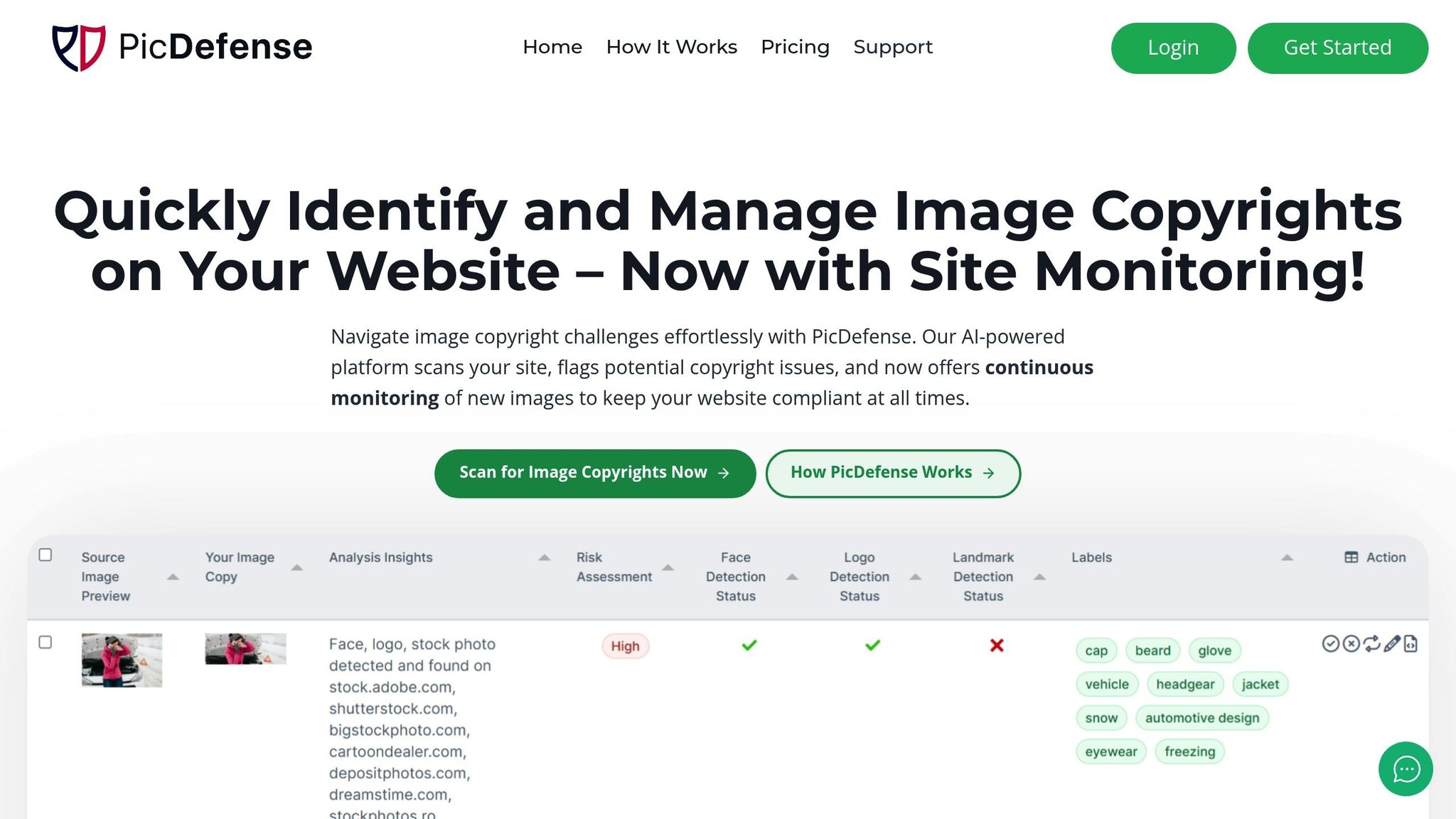
PicDefense.io Core Functions
PicDefense.io offers comprehensive copyright protection, including full-site image scans, risk scoring, metadata analysis, and proactive compliance tracking. Unlike generic tools, PicDefense.io provides automated reports, risk mitigation strategies, and monthly rescans to ensure ongoing protection.
With a database of over 73 billion indexed images[9], PicDefense.io ensures thorough source verification, making it a powerful tool for tackling copyright concerns.
AI Copyright Checking
The AI engine compares images against its massive database, assigns risk scores, generates compliance reports, and even suggests licensed alternatives when needed.
"PicDefense is a lifesaver. They helped me navigate the aftermath of a copyright demand letter with their thorough image scanning and risk analysis. I can't recommend them enough for anyone who wants to stay compliant and secure."[9]
Plans for Different Users
PicDefense.io offers flexible, credit-based pricing to suit all website sizes, with affordable per-image scanning and scalable subscription plans for ongoing monitoring. Custom plans are also available for high-volume users.
| Plan Type | Cost | Features |
|---|---|---|
| Single Scan (100 credits) | $20 | Basic image checking |
| Single Scan (500 images) | $85 | Comprehensive site scan |
| Single Scan (1,000 images) | $150 | Full website analysis |
| Site Monitoring | $30/month | 150 monthly image analyses and ongoing protection |
The Site Monitoring plan comes with several perks:
- Coverage for up to 3 websites
- Unused credits roll over to the next month
- Automatic detection of newly uploaded images
- Additional scans available at $0.15 per image
For added convenience, PicDefense.io offers a WordPress plugin, API access, and Zapier integrations to streamline workflows.
Long-term Copyright Management
Once you've dealt with immediate image concerns and implemented AI tools for detection, it's time to focus on strategies that ensure ongoing protection for your website.
Regular Image Checks
Set up a routine to monitor your images and maintain copyright compliance. Monthly audits using tools like Google Images, TinEye, or Bing Visual Search can help verify image rights [10].
Here are key areas to review during these checks:
| Check Type | Tools/Methods | What to Look For |
|---|---|---|
| Visual Inspection | Manual review | Watermarks, visible copyright notices |
| Metadata Analysis | Windows Properties, macOS Preview | EXIF data, ownership details |
| Source Verification | Reverse image search | Original publication, usage rights |
Focus on the most recent content and any user-generated submissions to ensure your compliance log stays updated. Use these findings to refine your team's workflows and policies.
Staff Copyright Training
In addition to regular checks, equip your team with the knowledge they need to avoid copyright issues. A well-informed team is essential for staying compliant and producing content responsibly.
Develop a training program that includes:
- How to use design tools like Canva and PicMonkey to create original graphics [1]
- Best practices for attributing licensed content
- Steps to verify image sources before use
- Proper documentation for image usage rights
"Our courses help you navigate the complex world of copyright." - CCC Copyright Education [11]
Keep your training updated to reflect any changes in copyright laws and guidelines.
Copyright Law Updates
Stay informed about copyright law changes by subscribing to reliable legal news sources. The U.S. Copyright Office's NewsNet is a great option for timely updates on new regulations and announcements [13][14].
Other helpful resources include:
- IPWatchdog: Business and policy updates in their Copyright section [13]
- World Intellectual Property Review: Insights on international copyright news [14]
- Legal platforms: Sites like Bloomberg Law and Law360.com [13]
For example, Australia's 2021 News Media Bargaining Code is a reminder of how quickly copyright rules can evolve [12]. To stay ahead, follow intellectual property blogs like IP Intelligence or Dear Rich: An Intellectual Property Blog for practical interpretations [13].
Conclusion: Protecting Your Website
Ensuring your website’s copyright compliance doesn’t have to be overwhelming. PicDefense.io automates the process, providing AI-powered tools for risk detection, compliance tracking, and demand letter defense. Stay protected with proactive monitoring and regular audits
To guard your content effectively, consider a multi-layered approach. Use technical measures like watermarks, upload low-resolution images, and disable hotlinking. At the same time, keep detailed documentation of your image rights.
"Copyright protection is a critical tool in safeguarding your website's intellectual property, ensuring that your original content is not copied or misused without your permission" [15].
Real-world cases underline the risks of weak copyright measures. A well-known fashion company faced significant losses from counterfeit goods due to inadequate protection [16]. Avoid such pitfalls by using tools like PicDefense.io for automated scanning and AI-driven risk assessments, along with regular manual checks.
| Protection Layer | Key Actions | Benefits |
|---|---|---|
| Technical | Watermarks, low-resolution uploads | Discourages misuse |
| Legal | Copyright registration, clear notices | Stronger legal position |
| Monitoring | Reverse image searches, AI tools | Early problem detection |
These strategies work together to safeguard your digital assets and strengthen your brand.
Copyright protection has long-term benefits too. It covers a creator's work for their lifetime plus 70 years, or up to 95 years for corporate works [16].
"The protection of a brand depends fundamentally on copyright. It guarantees that nobody else may use your creative works without authorization, therefore preserving the integrity of your brand identification" [16].
Protect your website from image copyright claims
PicDefense scans your entire website, identifies image risks, and stores proof of compliance — so you never get caught off guard.