Receiving a copyright demand letter can feel overwhelming, but your immediate actions are critical. Here’s what you need to know:
- Don’t panic. Most letters aren’t lawsuits but requests to stop using material and pay compensation.
- Avoid hasty actions. Don’t admit fault, delete files, or ignore the letter - these can worsen your situation.
- Start by verifying the claim. Check if the sender owns the copyright and review the alleged infringement details.
- Preserve all evidence. Save communications, screenshots, and metadata related to the content in question.
- Consult an attorney immediately. A legal expert can help you navigate the situation and craft a response.
First Actions to Take When You Get a Copyright Demand Letter
Receiving a copyright demand letter can be unsettling, but how you respond in those first steps is critical. Taking a careful, deliberate approach will help protect your legal standing and prepare you to address the issue effectively.
Read the Letter Thoroughly
Start by reading the entire letter word for word. Every detail in it matters, and understanding the specifics will guide your next steps.
First, pinpoint the image or images in question. The letter should include information such as the URL where the image appears on your website, the file name, or even a screenshot showing how it looks on your site. Make sure to note all these details exactly as presented.
Next, identify the nature of the claim. The letter may accuse you of "unauthorized use" or "copyright infringement", and it might specify whether the issue involves downloading the image without permission, exceeding the scope of a license, or removing watermarks.
Verify who sent the letter. Check the sender's name and their role - whether they are the copyright holder, a legal representative, or an agency acting on behalf of the rights owner. Some letters may come from well-known stock photo companies, while others might originate from less familiar entities. Record all contact details, including the return address.
Finally, carefully review the demands outlined in the letter. These often include requests to remove the image, pay licensing fees or damages, and provide a written response within a specific timeframe. Once you've gathered this information, start securing all related evidence.
Save and Secure All Evidence
Preserving evidence is essential to building your defense. Begin by saving all communications, including emails and attachments, and store these files securely in multiple locations, such as on your computer and in the cloud.
Take screenshots of the webpage where the image appears, making sure the full URL is visible. If possible, capture the image's metadata, as this can provide details about when and how the file was created or modified - details that may be critical to your case.
Locate the original image file and keep it unchanged. The file's creation and modification dates can serve as important evidence. If you have different versions of the image, save all of them.
Document the image's origin. Gather any emails, invoices, or download confirmations that show where you obtained the image. If it came from a stock photo site, find the receipt and license agreement. If the image was provided by someone else, such as a contractor or client, retain all related communications.
Lastly, construct a timeline of events. Note when the image was acquired, when it was published on your site, and when you received the demand letter. This chronological record will be invaluable when discussing your case with a lawyer.
Avoid Acting Hastily
Once you've reviewed the letter and secured the evidence, resist the urge to act impulsively. Quick decisions can sometimes do more harm than good.
Do not delete or alter any content on your website. Removing the image or related material could be seen as destroying evidence, which might weaken your position or imply guilt. Keep everything as is until you've consulted with an attorney.
Avoid contacting the sender immediately. While it might feel natural to explain your side or attempt to negotiate, premature communication can backfire. Anything you say could be used against you later, so it's best to wait until you have legal guidance.
Keep the situation confidential. Sharing details with friends or colleagues, even for advice, can complicate matters. Stick to discussing the issue only with your legal counsel.
Finally, remember that receiving a demand letter doesn't automatically mean you're headed to court. Many disputes are resolved through negotiation. A calm, well-thought-out approach in these early stages can set you up for a more favorable outcome down the line.
What NOT to Do After Getting a Copyright Demand Letter
Receiving a copyright demand letter can feel overwhelming, but your response plays a critical role in shaping the outcome. Some actions that may seem harmless - or even logical - can actually harm your case. Let’s break down what you should avoid to keep the situation from escalating.
Don't Admit You Did Anything Wrong
It’s natural to want to explain yourself or even apologize, but any statement that sounds like an admission of guilt can be used against you in court. Even casual remarks can backfire, making it harder for your attorney to defend you effectively.
Avoid saying anything that could imply unauthorized use, such as:
- "I didn’t realize I used your image without permission."
- "I’m sorry if I violated your copyright."
This also applies to informal settings like emails, social media, or casual conversations. Anything you say could potentially be discovered and used as evidence.
Instead, use neutral and factual language. For example, when responding to the letter, you can acknowledge receipt and state that you’re reviewing the matter. Avoid discussing fault or responsibility altogether.
Ignoring the letter, however, is just as risky.
Don't Ignore the Letter
Ignoring a copyright demand letter can be one of the costliest mistakes you make. Silence is often interpreted as defiance or even guilt, which can lead to the copyright holder escalating the matter to federal court. Once litigation begins, legal fees and damages can skyrocket - ranging from $750 to $150,000 per work infringed.
Most demand letters include strict deadlines, often between 10 and 30 days. Missing these deadlines won’t make the issue go away. On the contrary, it can trigger automatic escalation, where the case is handed off to litigation attorneys who are less open to negotiation.
Responding promptly not only shows good faith but also keeps settlement options on the table. Once a lawsuit is filed, the copyright holder is less likely to consider reasonable settlements, as they’ve already invested time and money into legal proceedings.
Don't Create Fake Licenses or Change Dates
If you don’t have proper documentation, it might be tempting to create or alter records to cover your tracks. Don’t do it. Falsifying evidence - whether it’s a fake license or altered dates - can turn a civil matter into a criminal one. It’s one of the worst decisions you can make when dealing with a copyright dispute.
Modern forensic tools can easily detect tampered files or fabricated records. Computer systems track multiple timestamps, making it nearly impossible to alter dates without leaving a trail. If you’re caught, the consequences go beyond the original copyright claim. You could face perjury charges, court sanctions, and even an automatic ruling in favor of the copyright holder.
Once your credibility is damaged, it’s hard to recover. Judges and juries will scrutinize all your evidence and testimony, even legitimate ones, with skepticism.
If you can’t locate original licensing documents, be upfront about it. Work with your attorney to explore other defense strategies. Missing paperwork is a common issue that can often be resolved legally. However, fabricating evidence will always make the situation worse.
Honesty and transparency are crucial. Protect your credibility, and let your attorney guide you through the best course of action.
Hour-by-Hour Plan for Your First 48 Hours
When you receive a copyright demand letter, the clock starts ticking. Acting quickly and methodically can protect your rights and strengthen your defense. Here’s a step-by-step plan to guide you through the first 48 hours.
Hours 1-2: Contact a Lawyer
The first step is to secure legal representation. Copyright law can be tricky, and missteps may lead to costly consequences. A qualified intellectual property attorney can analyze the claim, explain your legal options, and help you craft a response strategy.
Start by searching for attorneys who specialize in copyright law. Many offer free consultations, giving you a chance to get initial advice without upfront costs. If hiring a full-service attorney isn’t feasible, reach out to your local bar association for referrals to attorneys offering payment plans or reduced rates.
During your consultation, bring the demand letter and any related documents. Be honest about your situation - attorney-client privilege ensures your discussions remain confidential. If you can’t immediately connect with a lawyer, document your efforts to find one. This shows you’re acting in good faith, which could be valuable later.
Hours 2-6: Back Up and Organize Your Files
Next, safeguard your materials. Create a dedicated folder for all related documents and back them up in multiple secure locations. This includes the demand letter, any licensing agreements, purchase receipts, and email correspondence with stock photo sites or photographers. Even if a document seems unimportant, include it - it’s better to have too much information than not enough.
Once your files are backed up, start looking into other potential copyright issues on your site. Proactively addressing these can help you avoid additional legal headaches.
Hours 6-12: Check for Other Copyright Problems
With your files secured, take a closer look at your digital presence. Review your website and other platforms for any additional copyright risks. Identifying and addressing issues now can prevent future demand letters.
Tools like PicDefense can help by scanning your site for images that may pose copyright concerns. This AI-powered tool compares your images against databases of copyrighted content and flags potential risks. It’s a proactive way to assess your exposure and avoid surprises down the line.
Create a detailed inventory of all the images you use - on your website, social media, email newsletters, and even printed materials. For each image, note where it came from, its licensing details, and how it’s being used. Pay special attention to images sourced from platforms like Google Images or Pinterest, as these often lack proper licensing.
Hours 12-36: Collect Documents and Verify the Claim
Now it’s time to dig deeper into the claim itself. Gather all relevant documentation and verify the legitimacy of the demand.
Start by checking the copyright ownership. While copyright registration isn’t required for protection, it’s often necessary to initiate legal action for infringement. Look up the person or company making the claim. Verify their business details, website, and credentials - some demand letters come from entities trying to extract settlements for images they don’t actually own.
Organize all your licensing records, including purchase histories, contracts, and email confirmations. Many stock photo platforms maintain detailed records that can serve as proof of proper licensing. Compare the claims in the demand letter to your actual usage of the image. For instance, check if you used the image within the terms of the license - some licenses restrict commercial use or require attribution, which you may have overlooked.
Hours 36-48: Write and Review Your Response
With your evidence and documentation in hand, it’s time to finalize your response. Work closely with your attorney to draft a clear, factual reply. Record all correspondence and include timestamps for reference. Avoid sending any response without legal review - your words could heavily influence the outcome.
Your response might include acknowledging receipt of the letter, requesting additional evidence to verify the claim, or asking for more time to investigate. If you have proof of proper licensing, your attorney will help you present it effectively. If you don’t, and you’re considering a settlement, they’ll guide you through the negotiation process while safeguarding your interests.
Most demand letters come with strict deadlines, often between 10 and 30 days. Use these 48 hours to build a solid foundation for your response, ensuring you meet the deadline and protect yourself from further complications.
sbb-itb-59d21f2
Sample Responses That Buy You Time
After taking initial steps, use these templates to secure extra time while you work on your documentation and legal strategy. Keep your responses neutral and factual, avoiding any admission of fault or apology. Always consult your attorney before sending any communication.
All responses should be reviewed by your attorney.
Confirming You Received the Letter
This template allows you to formally acknowledge the letter while showing that you're addressing the issue without admitting any wrongdoing:
Subject: Receipt Confirmation – Copyright Demand Letter [Date]
Dear [Sender's Name],
I confirm receipt of your letter dated [Date] concerning alleged copyright infringement involving [briefly describe the image/content]. I have reviewed your claim.
While we do not admit to any wrongdoing, we are conducting a thorough investigation into the matter. As a precaution, the potentially infringing image has been removed from our website and all other locations on our server, including backups, while we work toward resolving this issue.
I will provide a more detailed response within [timeframe, typically 10-30 days as outlined in your letter] after completing our review.
Sincerely,
[Your Name]
[Your Title]
[Company Name]
This response demonstrates you're taking the claim seriously and acting in good faith by removing the content temporarily, without suggesting liability.
Asking for Proof of Ownership
Many claims come from parties who may not actually own the copyright. Use this template to request verification:
Subject: Request for Documentation - Copyright Claim Dated [Date]
Dear [Sender's Name],
I acknowledge receipt of your copyright demand letter dated [Date] regarding [describe the image/content]. To properly assess your claim, please provide the following documentation:
Proof of Copyright Ownership:
- Certificate of copyright registration from the U.S. Copyright Office
- Documents showing the chain of title and how rights to the work were acquired
- Original creation date and authorship details
Details of Alleged Infringement:
- Exact URL(s) where you claim the infringement occurred
- Screenshots or evidence of the alleged unauthorized use
- Specific licensing terms you allege were violated
Your Contact Information:
- Business registration details and physical address
- Information on the authorized representative if acting on behalf of another party
Once I receive the requested documentation, I will review your claims thoroughly. Please provide these materials within 15 business days.
Sincerely,
[Your Name]
[Your Title]
[Company Name]
This shifts the responsibility back to the claimant to substantiate their claim. Legitimate copyright holders should have this information readily available, while dubious claims may falter under such scrutiny.
Asking for More Time
If you need extra time to gather evidence or consult legal counsel, use this template to request an extension:
Subject: Request for Extension - Copyright Matter Dated [Date]
Dear [Sender's Name],
I acknowledge receipt of your letter dated [Date] regarding alleged copyright infringement. Due to the complexity of the issue and the need to gather relevant documentation, I am requesting a [30-day] extension beyond your stated deadline of [original deadline date].
This additional time will allow me to consult with legal counsel, review licensing records, and compile the necessary information for a complete response.
I anticipate providing a full reply by [new proposed date]. As a precaution, the image in question has been removed from our website during this review period.
Thank you for your understanding. I look forward to resolving this matter promptly.
Sincerely,
[Your Name]
[Your Title]
[Company Name]
Most legitimate claimants will agree to reasonable extension requests, particularly when you demonstrate your commitment to addressing the matter responsibly.
These templates offer a professional starting point, but every situation is different. Work closely with your attorney to tailor the language to your specific circumstances and the strength of your position.
Using PicDefense to Organize and Verify Image Licenses
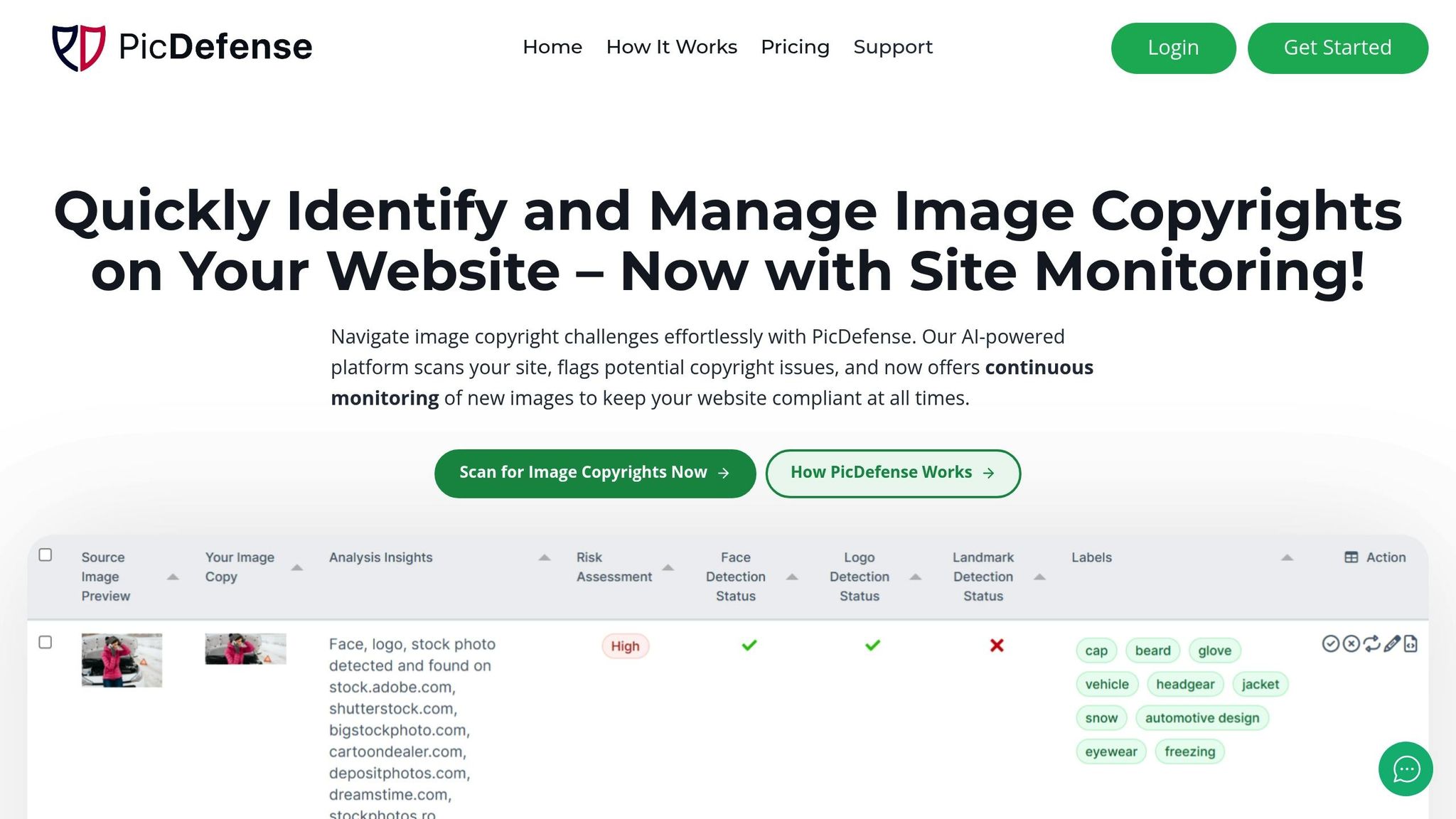
When dealing with a copyright demand letter, having quick access to detailed information about every image on your website is crucial. PicDefense simplifies this process by scanning your site, cataloging your images, and organizing your licensing documentation. This tool can help you avoid costly legal battles.
Scanning Your Site and Assessing Risk Levels
PicDefense makes verifying image licenses straightforward by scanning your entire site and analyzing potential risks. It compares your images against a massive database of 73 billion indexed images [1]. Using EXIF data, face detection, logo recognition, and other tools, PicDefense assigns a "PicRisk" score to highlight images that might have originated from stock photo libraries [1]. This process helps you quickly identify which images need immediate attention.
The pricing is straightforward: US$20 for 100 images, US$85 for 500 images, and US$150 for 1,000 images. For most small to medium-sized websites, the cost stays under US$200 [1].
Organizing License Documents and Extracting Metadata
PicDefense acts as a central hub for all your image licensing details. You can upload license receipts, record purchase dates, and include source information [1]. The tool also extracts metadata embedded within images, which often contains copyright details, making it easier to document licenses for flagged stock images [1].
"PicDefense detects if an image is a stock photo, but we don't know if you have a license for it. If an image is flagged as stock, it's up to you to track and document where you licensed it from." [1]
To streamline future scans, you can whitelist images you’ve already licensed or own. This ensures that subsequent checks focus only on images with unconfirmed licensing, saving time and effort.
Generating Legal Reports
PicDefense creates detailed legal reports that include risk scores, source analysis, and actionable insights [1]. These reports document flagged images, their potential sources, and technical metadata, providing a solid foundation for negotiating or disputing claims [1].
"PicDefense.io offers more than risk assessment; it's a comprehensive toolkit for achieving and showcasing image copyright compliance." [1]
For agencies managing multiple sites, the Agency Plan is a practical option. At US$150 per month, it covers up to 20 sites and allows for 1,200 image scans monthly [1], ensuring compliance and maintaining thorough documentation across projects.
Conclusion: Stay Prepared and Respond Quickly
Acting decisively within the first 48 hours can make all the difference between a manageable $3,000 settlement and an overwhelming $150,000 lawsuit. This stark contrast highlights why swift action is so critical.
Time is your greatest advantage when responding to copyright claims. Delays can weaken your position, while sticking to the hour-by-hour checklist outlined earlier ensures you cover every essential step to safeguard your business from escalating legal expenses.
Staying organized and proactive can turn copyright disputes into routine tasks rather than emergencies. Businesses that keep detailed, up-to-date image licensing records rarely experience the chaos and stress that demand letters bring. When you can quickly pull up receipts, confirm licensing dates, and prove ownership, many copyright claims can be resolved without stepping into a courtroom. Using tools that streamline documentation and keep records audit-ready can make this process even smoother.
The truth is, copyright demand letters are almost inevitable for businesses that use images online. Even companies that rely solely on licensed stock photos can face claims years down the line when receipts go missing or licensing details become unclear. Taking the time now to create defensible documentation can save you from future headaches.
Copyright trolls often prey on businesses that are caught off guard. A well-documented, prompt response combined with expert legal guidance can discourage further legal action. In the end, preparation is your best line of defense.
FAQs
What can I do if I can’t afford an attorney right away after getting a copyright demand letter?
If hiring an attorney right away isn’t within your budget, there are still ways to safeguard your interests. Start by exploring free or low-cost legal resources. Nonprofit organizations, legal aid services, and local legal clinics often provide advice or consultations at little to no cost. Additionally, some law firms offer free initial consultations, giving you a chance to understand your options without committing to any upfront fees.
While you’re seeking affordable legal help, consider replying to the demand letter with a polite, written response. Use this opportunity to explain your situation and request more time or clarification. This approach can help keep the situation from escalating while you work on securing legal support. Just be careful not to admit any fault or make statements that might be used against you later.
How can I confirm if a copyright demand letter and its claims are legitimate?
To determine if a copyright demand letter is legitimate, start by thoroughly examining its details. Identify the sender - are they a recognizable entity, like a law firm or the actual copyright holder? Double-check their contact information to ensure it matches official records. Be on the lookout for red flags, such as vague accusations, incomplete details, or errors in grammar and spelling, which might suggest a scam.
If the letter mentions specific copyrighted material, compare it closely to your own work or activities to assess whether the claims are valid. Be wary of letters that pressure you for immediate payment or threaten severe penalties, as these could be intimidation tactics. If you're uncertain about the letter's authenticity or how to respond, consulting a legal professional can provide clarity and help you decide on the best course of action.
What happens if I ignore a copyright demand letter or respond without consulting a lawyer?
Ignoring a copyright demand letter can have severe legal repercussions. You could end up being sued in federal court, face statutory damages as high as $150,000 per work for willful infringement, or even receive a default judgment if you don’t respond at all.
On the flip side, responding without proper legal advice can backfire. You might accidentally admit to wrongdoing, increase the damages you’re liable for, or escalate the situation unnecessarily. That’s why it’s crucial to consult a qualified attorney before making any moves. They can help you protect your rights and navigate the situation with minimal risk.
Protect your website from image copyright claims
PicDefense scans your entire website, identifies image risks, and stores proof of compliance — so you never get caught off guard.