
In real estate, using photos and virtual tours comes with legal risks. Misunderstanding licensing rules can lead to copyright violations, fines, and damaged reputations. This article explains key compliance issues and how to avoid them:
- MLS Photos: Rights often expire when a listing ends. Continuing to use them can lead to legal trouble.
- Virtual Tours: Each element (music, 3D models, videos) may require separate licenses.
- Property Photos: Contracts with photographers define usage rights; buying photos doesn’t mean unlimited use.
Key tips:
- Remove expired MLS photos promptly.
- Use written contracts to define photo rights.
- Track licenses and permissions for all images.
- Use AI tools like PicDefense to manage compliance and reduce risks.
Non-compliance can cost up to $150,000 per image in fines. Proactive measures save money and protect your business.
MLS Photo Ownership and Usage Rights
The ownership and usage rights of MLS photos are shaped by several agreements and can be more complicated than they first appear. Unlike stock photos, MLS images involve multiple parties, and their rights can change when a property listing expires.
Photographs are considered intellectual property[2], but many real estate professionals mistakenly believe that having access to MLS photos grants them unlimited usage rights. This is far from the case.
Who Owns MLS Photos?
Ownership of MLS photos generally falls into a few categories. If the listing agent hires and pays the photographer directly, the agent often owns the photos. However, photographers may retain ownership if their contract specifies this, or the brokerage may hold the rights if the agreement grants them usage rights.
Modern MLS systems now require agents to document the source of their photos and the associated licensing[1]. This process helps prevent unauthorized use and ensures there’s a clear paper trail for compliance.
The safest approach is to have written agreements that define photo rights. If no documentation exists, it's best to assume you have no rights to the photos.
Take Amoura Productions, a real estate photography company in Austin, Texas, as an example. They provide clients with exclusive licenses for marketing purposes but retain the rights to use the photos in their own marketing. They do not resell or license the images to others. Agents can transfer or sell the usage rights to third parties, but this requires written notification to Amoura Productions, and additional fees may apply if the company is asked to send the image files directly.
Some brokerages, however, adopt stricter policies. For instance, Dwellings by Rudy & Hall, a brokerage near Detroit, requires agents to use professional photographers from an approved list. This ensures consistent licensing terms and reduces risks related to compliance.
What Happens When Listings Expire?
When a listing expires, the usage rights for its MLS photos often expire as well. This can lead to compliance issues if agents continue to use the photos in marketing materials - whether online, in print, or on social media - after the rights have lapsed. The same applies to other agents who featured the property during its active listing period; they must also stop using the photos once the listing expires.
To address these challenges, some MLS systems have implemented copyright management programs. These include automated tools that flag expired listings and remind agents to remove outdated images. However, the situation can become even more complex when properties are relisted. Agents may need to negotiate new licensing agreements or verify that the original agreements allow for extended use. Clear documentation is critical in managing these transitions.
How to Document and Track MLS Photo Licenses
To sidestep potential compliance issues, it’s essential to document all licensing terms from the start. Review the standard licensing terms provided by photography companies, and negotiate adjustments if necessary.
When uploading photos to the MLS, include details about the photo source and, if applicable, attach the licensing agreement[1]. This creates an official record of the rights tied to the listing.
For maximum protection, consider obtaining full ownership of the photos through an assignment agreement or a "work made for hire" contract. If ownership isn’t an option, aim for a broad exclusive license that allows for extensive use of the photos. These agreements should clearly outline scenarios like relisting, sharing with other agents, and continued marketing after the listing expires.
If agents wish to use listing photos they didn’t create, they must contact the listing agent to confirm ownership or sublicensing rights. Written permission is essential, as relying on verbal agreements can lead to significant legal risks.
Lastly, agents should familiarize themselves with their brokerage’s policies on listing photos. Depending on the brokerage, agreements may offer additional protections for agents, but these policies can vary widely. Using a centralized system to track licensing agreements, expiration dates, and permissions across multiple listings can help prevent small oversights from turning into costly legal problems.
Virtual Tour Copyright Issues
Virtual tours bring a unique set of copyright challenges. Unlike a single photograph, these immersive experiences blend multiple components - background music, video clips, 3D models, graphics, and embedded content - each of which might require its own licensing.
Assuming that virtual tour platforms automatically handle all copyright clearances can lead real estate agents and brokerages into unexpected legal trouble. Every element in a virtual tour carries its own potential liability, making compliance far more complex than traditional property photography. Addressing these risks requires a detailed approach to licensing, as outlined below.
Copyright Risks in Virtual Tours
Virtual tours typically involve four key areas where copyright issues arise:
- Background music: Popular tracks are often used without proper licensing from organizations like ASCAP, BMI, or SESAC, which can result in infringement claims.
- Video content: Stock footage, drone shots, and lifestyle clips may come with licenses that don’t extend to commercial real estate marketing.
- 3D models and renderings: Architectural designs and staging models can be protected by both copyright and trademark laws.
- Graphics and logos: Branded content must be cleared for commercial use to avoid potential legal conflicts.
How to Secure Licenses for Virtual Tour Assets
To navigate these challenges, start by cataloging every element of your virtual tour - music, videos, 3D models, graphics, and any branded materials. This inventory will help you identify licensing needs early in the process.
- For music, work with performance rights organizations or use royalty-free music libraries like AudioJungle, Epidemic Sound, or Artlist. These platforms offer commercial licenses tailored for marketing purposes.
- For video content, carefully review the licensing terms for any stock footage to ensure it’s cleared for commercial real estate use and embedding in virtual tours.
- For 3D models, check for restrictions on commercial use or attribution requirements. If you partner with virtual staging companies, make sure contracts explicitly cover the licensing of 3D assets for your intended purposes.
- Document everything: Keep a dedicated licensing file for each project, including purchase receipts, license agreements, and usage terms. Adding screenshots of license pages and download confirmations can provide extra protection if your usage rights are ever questioned.
Tools for Managing Virtual Tour Compliance
Given the complexity of these risks, automated tools can simplify the process of staying compliant. Platforms like PicDefense help real estate professionals track and document licensing across multiple projects.
- PicDefense’s AI features verify the source and licensing status of embedded content, while its centralized documentation hub makes it easy to retrieve records during audits.
- The "Smart Rules" feature flags unlicensed content before a virtual tour goes live, reducing the risk of post-publication violations.
- A risk scoring system highlights tours with the most exposure, allowing agents to focus on resolving high-risk issues first.
- For brokerages, centralized license tracking simplifies oversight across multiple agents and projects. Collaboration tools enable compliance managers to maintain audit-ready records and ensure consistent licensing practices across all listings.
Photographer Contracts: Setting the Right Terms
Photographer contracts are essential tools for protecting image rights, especially in real estate marketing. These agreements not only safeguard your interests but also ensure that you have the flexibility to use images across various marketing platforms. By setting clear terms, you can avoid disputes and streamline your marketing efforts.
Key Contract Clauses to Protect Your Business
When drafting a photographer contract, several clauses are particularly important to cover your bases:
- Assignment vs. Licensing: Understand the difference. An assignment gives you full ownership of the photos, while a license grants specific usage rights, leaving ownership with the photographer. For most real estate marketing needs, licensing is more cost-effective and sufficient.
- Scope of Usage: Be specific about where and how the photos can be used. This might include websites, social media, print materials, and MLS platforms.
- Duration Clauses: Clarify how long you can use the photos. While many photographers offer one-year licenses, longer terms are often necessary in real estate since properties may be relisted or marketing materials reused for years.
- Transferability Rights: Ensure the contract specifies whether usage rights can be transferred to new owners or listing agents. This is crucial for maintaining the value of your marketing assets during business transitions.
- Sublicensing Provisions: These allow you to grant usage rights to third parties, such as vendors or marketing partners, without needing additional photographer approval.
By incorporating these clauses, you can align your contracts with your broader image licensing strategy and avoid compliance headaches.
Negotiating for Indefinite Usage Rights
Securing indefinite rights can simplify your long-term marketing plans and save money in the future. When negotiating, explain your business model and how the photos will be used over time. Many photographers are open to expanding usage rights for an additional fee.
- Indefinite Usage Terms: These remove the need to renew licenses or negotiate extensions. While photographers may initially hesitate, offering a higher upfront fee for perpetual rights can often resolve concerns.
- Multi-Platform Licensing: Make sure your contract covers all current and future marketing channels. Instead of listing specific platforms, use broad terms like "digital marketing purposes" to allow flexibility as new platforms emerge.
- Property Relisting Rights: In real estate, properties often return to the market after renovations or with new agents. Your contract should explicitly allow photo reuse for future listings of the same property.
- Portfolio and Promotional Usage: Photos of sold properties retain value for your marketing. Ensure your contract permits their use in presentations, websites, and promotional materials indefinitely.
By addressing these points, you can maximize the value of your photography investment while avoiding future complications.
Importance of Written Documentation
Even after agreeing on terms, proper documentation is crucial. Written contracts provide legal protection and help prevent misunderstandings, even when working with photographers you trust.
- Contract Storage and Organization: Keep all contracts, payment receipts, and photo delivery confirmations in a dedicated folder for each project. Organized records make it easier to reference agreements when needed.
- Documenting Amendments: If project details change - such as needing additional usage rights - document these updates in writing. Both parties should sign off on any amendments to the original contract.
- Proof of Compliance: Maintain records of where and how photos are used, along with publication dates. This documentation can protect your business in the event of copyright disputes by demonstrating good faith adherence to licensing agreements.
- Succession Planning: Consider how contracts will transfer during business changes, such as ownership transfers or agent departures. Clear terms ensure your photo library remains usable no matter what transitions occur.
With well-structured contracts and organized documentation, you can confidently use images across all marketing channels. These agreements not only protect your current assets but also prepare your business for future challenges in managing digital assets. By taking the time to get these details right, you’ll be setting yourself up for long-term success.
sbb-itb-59d21f2
Using AI for Image Compliance and Digital Asset Management
Keeping up with image compliance across MLS photos, virtual tours, and photographer contracts can feel like an endless, time-consuming task. But AI-powered tools are changing the game, automating these processes and helping protect businesses from copyright claims. This technology streamlines compliance, making the process faster and more efficient.
How PicDefense Simplifies Image Compliance
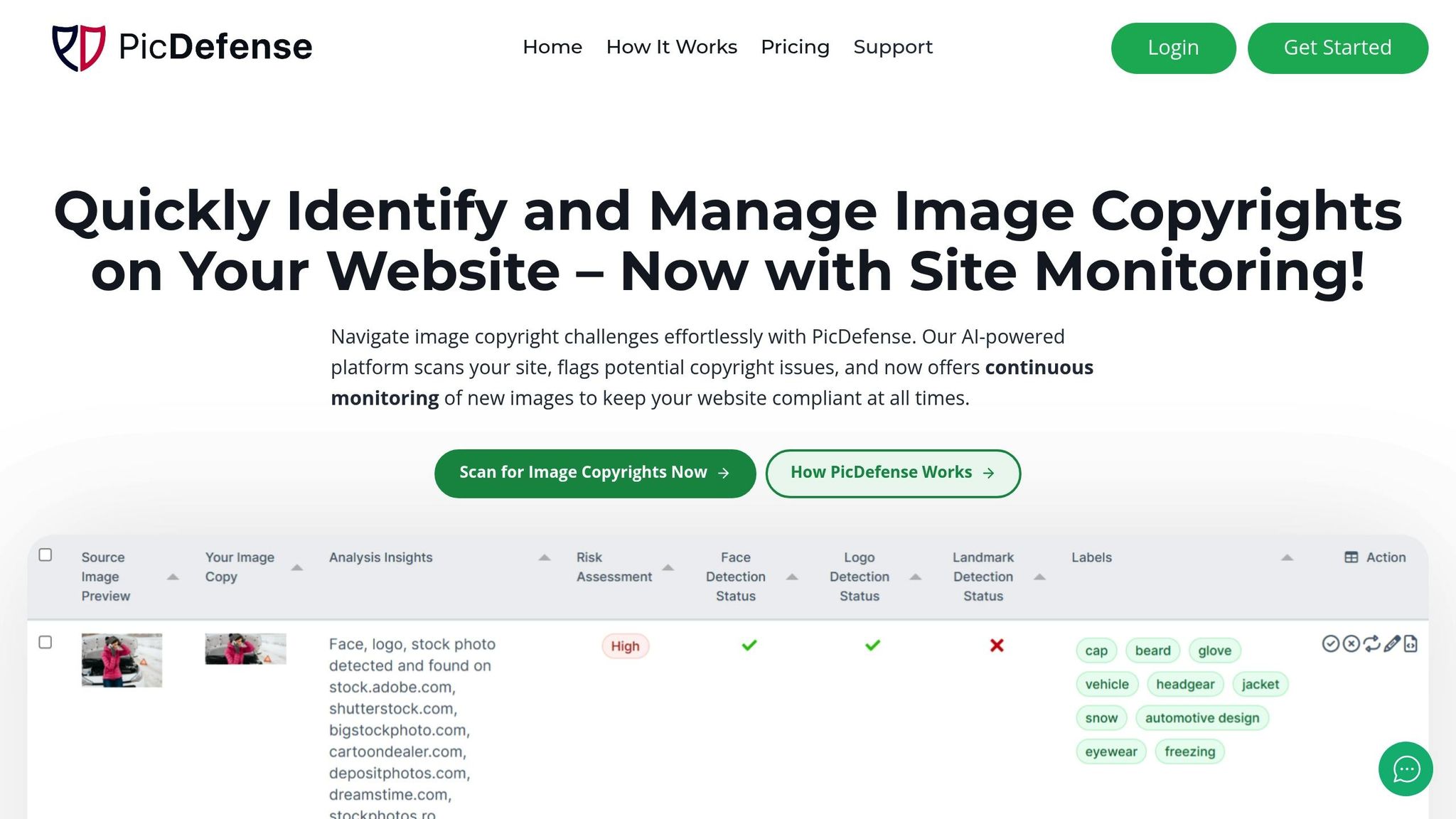
PicDefense is designed to take the headache out of image compliance. It scans your website to build an inventory of images, flagging potential copyright risks. By analyzing EXIF data, identifying faces and logos, conducting reverse image searches, and assigning a PicRisk score, it pinpoints the images that need your immediate attention. This system is especially useful for managing MLS photos, virtual tours, and photographer contracts.
For example, images with high-risk scores might include watermarked stock photos, professional headshots without clear licensing, or property photos appearing on multiple sites without proper attribution. The PicRisk score eliminates uncertainty, helping you focus your compliance efforts where they’re most needed.
The platform’s Smart Rules feature automates tasks like whitelisting trusted photographers and flagging high-risk images. For instance, you can set rules to automatically approve images from photographers you work with regularly or flag photos featuring recognizable landmarks that may require special permissions.
PicDefense also helps you track down original image licenses. Through backlink analysis, it suggests potential sources for photos - even if you’ve forgotten where they were purchased. While the AI provides recommendations, you remain in control, verifying licensing details and uploading documentation to confirm ownership.
Centralizing Licensing and Documentation
One of PicDefense’s standout features is its ability to centralize all your image licensing documentation. Purchase receipts, photographer contracts, and license agreements can be uploaded directly to each image record, creating a well-organized digital archive.
This is particularly useful when dealing with copyright claims, as timestamps from archives are often used to challenge ownership. PicDefense records when each image was first used and stores the original purchase documentation, offering clear proof of proper licensing before publication.
The platform integrates smoothly with your existing workflows, thanks to its WordPress plugin and API connections. Compliance documentation is automatically handled as you publish new content, eliminating manual steps that can easily be missed during busy times.
Collaboration tools make it easy for teams to access compliance records instantly. By combining centralized documentation with proactive tools, PicDefense ensures potential risks are addressed before they become major issues.
Benefits of Proactive Compliance
Taking a proactive approach to image compliance does more than just prevent legal disputes - it safeguards your reputation. By anticipating and resolving risks early, organizations can avoid costly lawsuits and save time otherwise spent scrambling to respond to copyright claims. Instead of panicking when a demand letter arrives, you’ll have all the documentation you need to resolve the issue quickly and efficiently.
Many real estate professionals using PicDefense report feeling more confident, allowing them to focus on growing their business instead of worrying about potential legal trouble.
What’s more, PicDefense’s credit-based pricing model ensures you only pay for the scans you need, making this proactive compliance solution accessible to both solo agents and large brokerages alike.
Best Practices for Maintaining Real Estate Image Compliance
Maintaining compliance with image copyright laws in real estate requires diligence and a well-structured approach. By following established best practices, professionals can avoid costly mistakes that might lead to copyright infringement claims.
Step-by-Step Compliance Checklist
To stay on top of compliance, consider these essential steps. They build on earlier advice about tracking MLS photos and managing photographer contracts, forming a comprehensive strategy.
- Audit your image library. Keep a detailed record of every photo you use, noting its source - whether it’s from an MLS listing, a photographer agreement, or a stock photo license.
- Remove expired MLS photos promptly. Ensure that MLS photos and virtual tour assets are taken down within 24 hours of a listing's expiration to avoid unauthorized use.
- Organize photographer contracts. Store digital copies of all agreements, categorized by photographer and date. Include details like usage rights, time limits, and any restrictions on editing or sharing. This documentation is critical if disputes arise later.
- Schedule regular reviews. Conduct monthly audits for new images and quarterly checks for contract renewals. Address any gaps in your records to ensure ongoing compliance.
- Establish approval workflows. Before publishing any image, confirm its licensing status and document the source. Train your team to use images only after verifying proper licensing.
Streamlining these processes with technology can make compliance more manageable.
The Role of AI in Long-Term Compliance
AI tools can take much of the manual work out of managing image compliance. By automating routine checks and monitoring risks, these tools provide an extra layer of protection against potential copyright issues.
- Automated licensing checks. AI can flag images with watermarks, detect copyrighted logos or landmarks, and identify photos appearing on multiple websites without proper attribution.
- Efficient task management. Smart automation can whitelist images from trusted sources while flagging questionable ones for manual review, saving time and reducing human error.
- Continuous monitoring. Unlike periodic audits, AI systems offer ongoing surveillance, scanning your website for new images and alerting you to potential risks, such as missing licensing documentation or copyright violations.
- Seamless integration. Many AI tools work with existing workflows, using APIs and plugins to verify compliance automatically when uploading or updating website content.
Financial and Reputational Impacts of Compliance
The stakes for copyright compliance go beyond just process improvements - they can have serious financial and reputational consequences.
The financial risks are steep. Copyright infringement can cost between $200 and $30,000 per photo in statutory damages, with willful violations reaching as high as $150,000 per image. Each website where an infringing photo appears counts as a separate violation, multiplying the potential damages.
"Statutory damages for copyright infringement range from $200 to $30,000 per photo. Copyright infringement is a strict liability offense, meaning you are liable even if you didn't know you were infringing someone's copyright. In fact, damages go up to $150,000 per photo for willful infringement (17 U.S.C. §504). Each website the photo appears on counts as a separate use of the photo."
- Cheri D. Andrews, Esq. [3]
Prevention is far cheaper than penalties. Investing in proper licensing, documentation, and compliance tools typically costs a fraction of what you’d pay in fines or legal fees. For example, a few hundred or thousand dollars annually for compliance systems is a small price compared to the potential exposure of $150,000 per image.
Reputation matters, too. Copyright violations can tarnish your professional standing and strain client relationships. The National Association of Realtors (NAR) requires members to indemnify their MLS and fellow subscribers for damages caused by unauthorized photo uploads [3], further increasing liability.
Compliance as a competitive edge. By adopting strong compliance practices, agents and brokerages can confidently use high-quality visuals without worrying about legal repercussions. This focus on compliance frees up time and energy for growing their business.
Incorporating systematic compliance processes not only reduces legal risks but also enhances operational efficiency. By prioritizing these practices, real estate professionals can better navigate copyright challenges and protect their businesses.
FAQs
Can I use MLS photos after a listing expires, and how do I avoid legal issues?
Using MLS photos after a listing expires can lead to copyright violations and possible legal trouble. These photos are usually protected under copyright laws, meaning you need explicit permission to reuse them. If you skip this step, you could face fines or other legal issues.
To avoid problems, always secure written consent from the copyright owner - this could be the photographer or the original listing agent - before reusing any images. Another option is to use fresh, properly licensed photos for your listings. Taking these steps not only keeps you within the law but also demonstrates professionalism in the real estate industry.
How can I manage and track licenses for virtual tour elements to avoid copyright issues?
To steer clear of copyright issues in virtual tours, make sure to obtain written licenses or permissions for every element you plan to use - this includes images, videos, music, and other media. Keep a thorough record of these agreements, noting details like expiration dates and usage terms, so you can easily track your rights.
For better organization, you might want to use digital rights management (DRM) tools or licensing software to keep tabs on renewals and ensure compliance. Adding digital watermarks or copyright notices to your assets is another smart move - it helps safeguard your intellectual property and makes tracking unauthorized use much simpler. By following these practices, you can confidently ensure that all the elements in your virtual tours are legally covered.
What should I include in photographer contracts to protect my real estate business from legal issues?
To protect your real estate business, it’s essential to include a few critical clauses in your contracts with photographers. Here’s what to pay attention to:
- Usage rights: Spell out exactly how, where, and for how long the photos can be used. This avoids confusion and helps prevent disputes over unauthorized use.
- Ownership and licensing: Decide upfront whether the photographer keeps ownership of the images or if it transfers to your business. If licensing applies, make sure the terms are clearly outlined.
- Indemnification: Add a clause that shields your business from legal claims tied to the images, so you’re not held responsible for any unintended issues.
Covering these bases reduces legal risks and ensures both you and the photographer are on the same page. It’s a win-win for everyone involved.
Protect your website from image copyright claims
PicDefense scans your entire website, identifies image risks, and stores proof of compliance — so you never get caught off guard.